
Moving franchises forward can be a tough nut to crack. It sometimes feels as though those working both in front of and behind the camera have a near-impossible task. How do they carry on and revitalize a legacy when the decision to either look ahead or glance back risks generating opposition from its fanbase?
A more recent example of this challenge can be seen in the Star Wars sequel trilogy, particularly when we consider The Force Awakens and The Last Jedi. At the time of release, the former was criticised for being a proxy-remake of the 1977 original, while the latter was considered by many to be an aggressive rejection of the very legacy it was pledging to continue. Both are examples of leaning into and rejecting a franchise’s roots; only for each attempt to garner negative feedback.
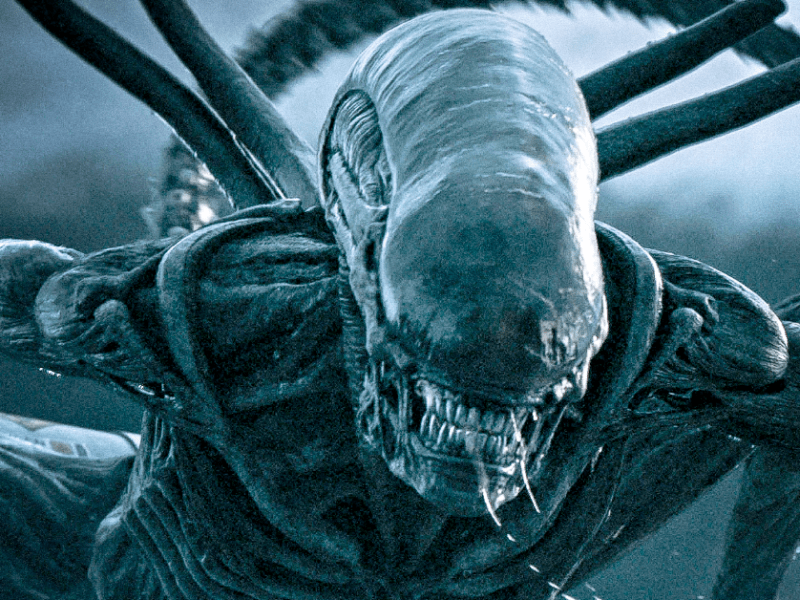
The Alien series has had a similar issue over the years. To date, there have been eight cinematic sequels and spin-offs (including the Alien versus Predator movies) relating to Ridley Scott’s 1979 original. Some of these have tried going down remarkably dissimilar routes to their predecessors (Prometheus and Alien: Resurrection), whereas others have strived to lean more into the familiar (Alien: Covenant and Alien: Romulus). All have been criticised to varying degrees for either being too familiar or too divorced from the movie they all stemmed from.
All of which leads me to wonder, where does Noah Hawley’s Alien: Earth fit into all of this? Can it be considered a nostalgia-driven retread of all that was once great and good, or can we consider this a bold new chapter in a 46-year-old series? Though we’ve yet to see this series play out in full, the answer in terms of its opening episode is a mixture of the two.
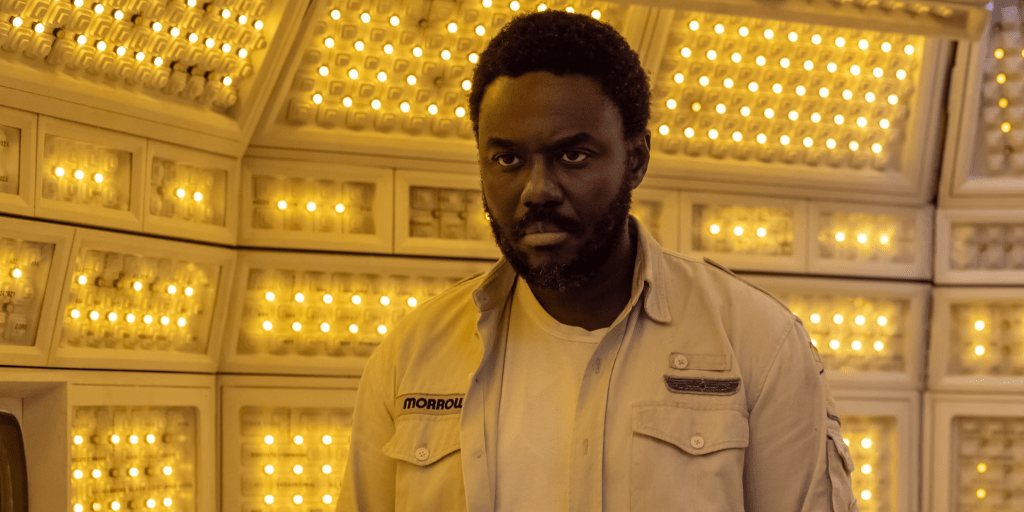
Alien: Earth’s debut, Neverland, opens in remarkably familiar territory. The USCSS Maginot operates as a stand-in for the USCSS Nostromo from Scott’s 1979 original. In addition to the clinical white canteen; grubby, pipe-filled “basements”; clunky computer boot-ups; and endless, grated corridors; these scenes are shot in a similar fashion to the franchise’s debut feature. Even the crew are dressed in a remarkably familiar manner to Dallas’ crew. As the show opens with the Maginot crew awakening from hypersleep to have some breakfast, I felt my inner Alien fan-girl grumbling in discontent. I was falling foul of the same behaviour I’ve referenced up top: a fan of the original, moaning that they weren’t doing anything different.

Although the events of Neverland’s opening differ from that of Alien, it still feels familiar enough that you’d be forgiven if you mistook it for a remake. At least that’s how it looks from the word “go”. As the runtime progresses, however, we start to learn that the events are not entirely the same this time around. The crew have already picked up a bunch of extraterrestrial specimens and are in the process of taking them home. They are already 65 years into their mission, and they are not responding to any sort of otherworldly signal interfering with their spacecraft.
Be that as it may, a lot of this opening is largely fan service. It’s a deliberate choice by showrunner Noah Hawley. It’s the usual blue-collar workers on a grubby, futuristic spaceship, working for the Company. We’ve been here before. It’s setting the scene, establishing with meticulous detail that this is very much a product of the same feature that saw Ellen Ripley encounter a Xenomorph for the first time.
The next scene, however, throws us into remarkably unfamiliar territory. Gone are the mollusk-shaped pipes and white padded office quarters. The retro ’70s aesthetic most commonly associated with the original Alien is replaced with sleek, polished, minimalistic interiors on a lush, green island. The B-plot, sitting independently from the Xenomorph A-plot, feels more like it belongs within a Blade Runner-style, Stanley Kubrick-inspired TV show more than anything.
This side of the story is more fixated on trillionaire Boy Kavalier and his desire to engineer synthetic vessels for the minds of terminally ill children. This story leans into the franchise’s fixation with artificial people, yet does so without relying too heavily on the familiar. The androids of the Alien series have always existed more as an intriguing footnote to the wider story and are therefore less associated with the aesthetic identity of the series. Therefore, Hawley has opted to set these themes in a less familiar territory. This offers up a version of Earth that we haven’t ever properly seen in this universe beyond that of Alien: Resurrection. He can move away from the antiquated, poorly funded space trucks and offer up his own perspective of what the wider world of this fictional space looks like.
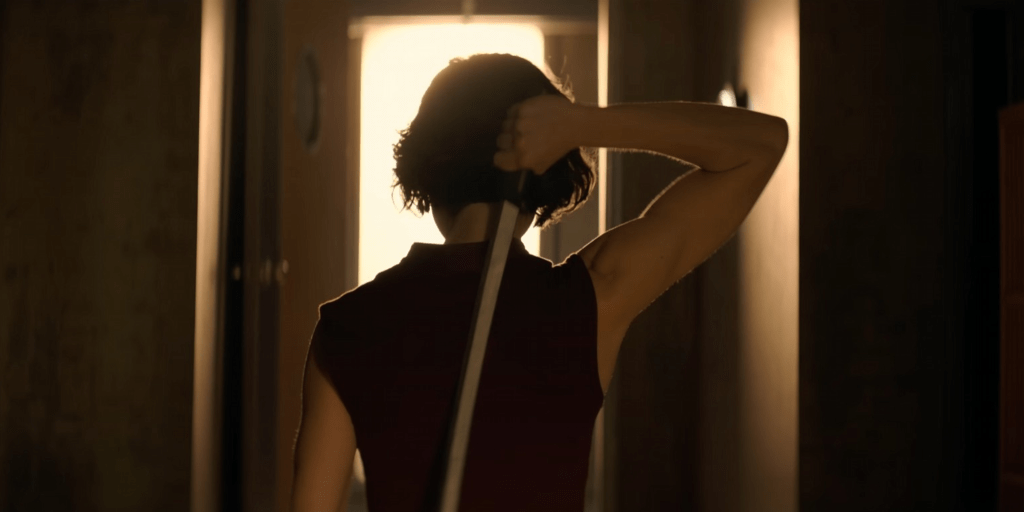
All of which makes for a series of sequences that feel remarkably dissimilar from the Nostromo-inspired scenes taking place in outer space. There has been a commonly held theory for quite some time now—started by Scott when creating Prometheus—which argued that the fictional reason the Nostromo looked like it was built in the 1970s (beyond the fact that it was built in the 1970s) was because of finances and class. Prometheus had holograms and shiny monitors because it was funded by billionaires. Ripley and company had oversized, Teletext TVs because their ships were cobbled together on a shoestring budget. Hawley goes one step further here, utilising the 65-year mission length to establish these ships as being legitimately old. These were built in the 2060s, when space travel was still rudimentary and developing. While the vessels gliding across the cosmos may look antiquated, the mother planet will have moved on as the natural flow of time has moved the world forward.
There is even an additional reason mentioned by Noah Hawley in a recent interview with Simon Mayo, in which he specifies that Weyland’s aesthetic in this universe differs considerably from it’s rival company, Prodigy, meaning drastically different visual landscapes exist in this universe, depending on where the story is playing out.
From a fictional standpoint, the contrast between the Maginot and Boy Kavalier’s billion-dollar synthetic project presents a visual argument for the differing environments that make up the Alien universe. Looking at this from a Doylist perspective, however, demonstrates that Alien: Earth might well be trying to work through the issue of moving a franchise forward without outright rejecting its past.
By jumping between the old and the new, this episode is essentially inviting its audience to have its cake and eat it. It wants to satisfy the pleasure that tends to be felt when indulging in familiar iconography, all without it growing stale. Neverland treats viewers to a comfort dish before offering them a new course on the menu, before reverting back to the familiar. Like a pendulum swinging between the new and the old, it evokes nostalgia and flirts with the unfamiliar within the scope of a singular narrative.
In many respects, this model is a revised approach to what we saw Alien: Covenant attempt. Scott’s sequel to 2012’s Prometheus spent a significant portion of the film’s earlier half telling a story fixated on gods and robots. For the most part, it felt like a sequel to Prometheus which, in turn, felt like a non-Alien script allocated to an Alien-adjacent movie for marketing purposes. As we approach the third act in Covenant, we suddenly get a speedrun of 1979’s Alien. It rushes through all the major plot beats, giving us a 30-minute, high-octane version of a movie we’d seen over three decades earlier. Earth tries a less frantic and more balanced approach. It gives us both standard Alien and unique Android stories from start to finish, gently shifting between the two at regular intervals. Both stories get a chance to play out in full on screen, before colliding into something new during the final segments of the episode.
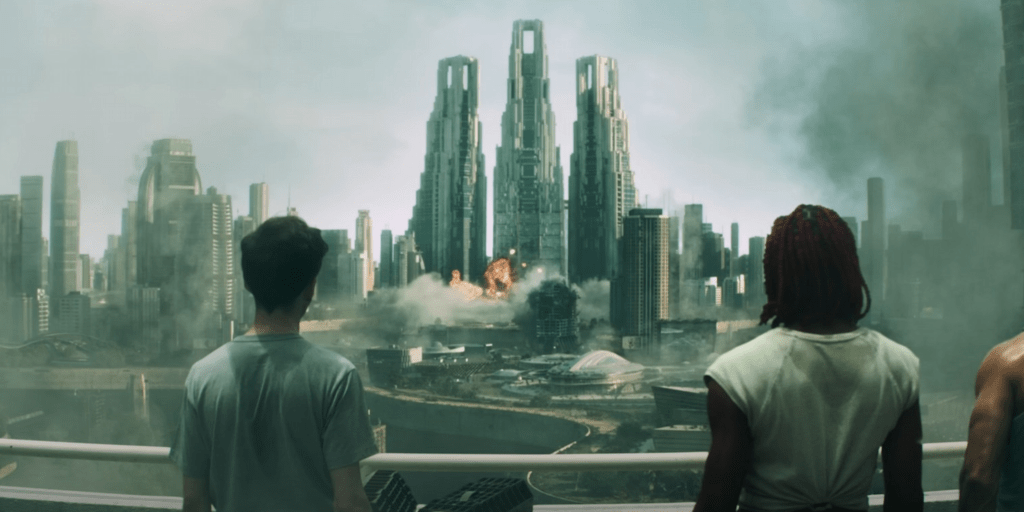
Of course, the collision of the two worlds at the end was always going to be inevitable. This approach is great, but it also has a limited lifespan. As far as opening episodes go, this is an effective way to get fans on board. Comfort and excitement are teased in equal measure, but that cannot be sustainable for an entire series. You cannot have two unrelated plots just playing out in isolation. In many ways, this inevitable collision becomes part of the appeal. By design, we know they are going to become one story, and figuring out how those collisions are going to take place becomes just as appealing as trying to figure out any sort of mystery.
Unfortunately, the inevitable merging of storylines doesn’t quite feel as natural and earned as it could have been here. Boy Kavalier’s decision to send his synthetic children to the Maginot crash site feels forced and nonsensical. We are told during the earlier parts of this episode that Wendy must never be able to visit her brother after her mind is transferred into an artificial body because no one on Earth is to know of her existence. Kavalier’s technology is top secret and carries with it a whole host of ethical questions that would have severe consequences, should knowledge of its existence make its way into the public sphere. This is why his decision to knowingly send Wendy and her synthetic siblings directly to the crash site where her brother is stationed is utterly bewildering. He’s meant to be one of the smartest people on the planet. Surely he knows she’s going to out herself to her brother. Also, why on Earth would you send a bunch of super-strength children to handle a public disaster?
These moments in the episode undermine a lot of the work Hawley has put into the earlier segments of this episode. For the most part, it’s a legitimately interesting opening that takes a lot of familiar aspects, then fuses them with unique and genuinely interesting ideas. This bit, however, just feels forced. It’s like he just needed to get Wendy to ground zero of the Xenomorph A-plot, so he had Kavalier do something stupid so that all the major storylines would converge before episode two started.
It’s possible that this plot inconsistency is addressed as the series progresses. Or, it could well be a character flaw of Kavalier. Maybe the whole “keeping them a secret” angle is something his staff are more fixated on than he himself is. Maybe he doesn’t give a damn about the consequences, as he might feel the rules don’t apply to him. There are possible ways to think around this issue, and potential explanations that might materialise as the show progresses. In terms of its inclusion within a singular episode, however, it’s a distracting enough issue to make the whole affair feel forced and lazy.
By and large, Neverland manages to alternate between two different approaches to continuing a franchise. Half of the episode dishes up enough nostalgia-heavy imagery and storytelling to satisfy fandom’s hunger for the familiar, all without it becoming too rich and sickly. The other half does a decent job of offering up something new and less rooted in the visual imagery we’re familiar with. The Peter Pan-inspired subplot with Boy Kavalier, Wendy, and her synthetic family offers up a story that mines its ideas from wider science fiction stories and visuals, inviting us to embrace a more expansive fictional landscape that exists beyond the lived-in walls of the USCSS Maginot. It may feel heavy-handed and forced as the two plots inevitably collide, but it’s all done well enough to generate enough intrigue for the series ahead.





 Amber Poppitt
Leave a comment