
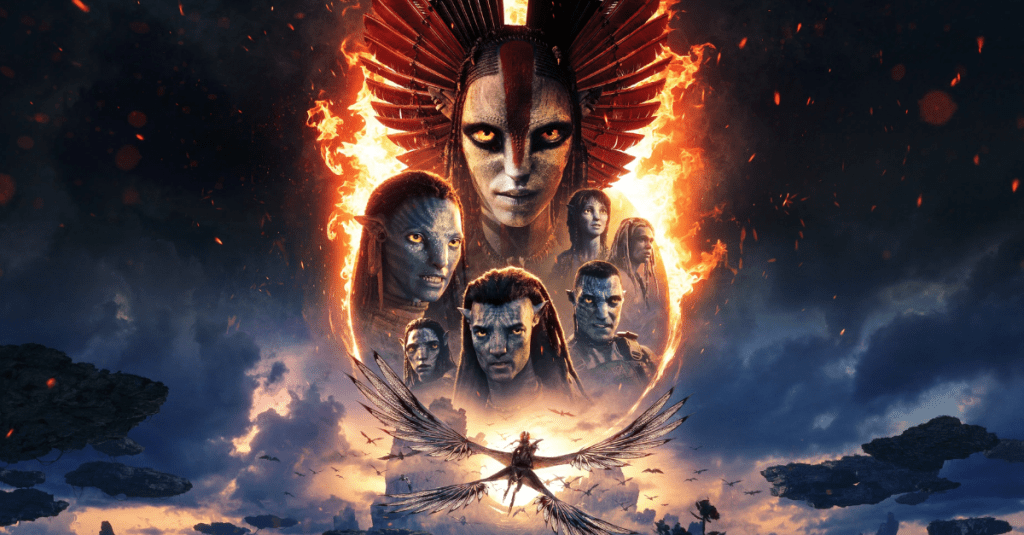
Spoilers Ahead
There’s a peculiar missionary zeal that comes with being a lifelong James Cameron fan. For as long as I can remember, I have desperately wanted to bring others into the fold, yearning for them to feel exactly the way I feel when confronted by his storytelling. Ever since I was a young child, Cameron’s films have evoked a joyous alchemy of wonder and melancholy that other directors have struggled to evoke within me. To my mind, he is a highly important filmmaker, one whose impact I’ve been desperate to communicate to others over the years; be they friends, acquaintances, family members, or partners.
Whenever a new Cameron film hits theatres, a piece of me hopes that this will be the one to finally convert the naysayers who mock and roll their eyes whenever my enthusiasm for this director seeps to the forefront of my personality. Perhaps this will be the entry that makes my peers see what I see; the light bulb moment that sparks clarity for them. The heartbreak and wistful awe will finally bleed through the screen and into their souls.
As much as I enjoyed Avatar: Fire and Ash, I think it’s perhaps safe to say this isn’t the entry that’s going to serve as a turning point for such sceptics. In fact, if you want to introduce people to Cameron’s work, I’d argue that this is perhaps the one you should stay away from for the time being. For all of the movie’s strengths, this is also the one that validates much of the criticisms often aimed at this particular director’s work.
None of which is to say I disliked this film. Quite the opposite. Though Fire and Ash serves to burn my dreams of converting critics to a smouldering pile of rubble, it still remains a heaven sent for those who love this franchise. While the critical part of my brain can certainly acknowledge the problems that are present within this instalment, I still had a blast with this one. Sure, it is clunky in places and brings a number of Cameron’s weaknesses to the forefront, but it is also over three hours of high-octane fun that allows the director to relish in his love of visual worldbuilding, heart breaking character moments and action packed set-pieces. If you like the preceding chapters, this one is unlikely to shift that opinion. This is Cameron at the apex of his game; flashy, expensive, delightfully indulgent, and pushing technological advancements to their limit.
Yet for all the fun, engagement and emotion crammed into this colossal cinematic spectacle, it’s certainly a flawed entity in terms of its screenplay; which is enough to pipe up the franchise’s critics. Much of the issues surrounding the script’s length, originality and narrative simplicity are similar to the criticisms leveraged at the series back in 2009 and 2022. It’s not so much that the scripts have gotten worse; but that they’ve refused to address any feedback made toward them the first two times around.
One of the biggest criticisms I’ve seen levelled at this movie is the fact that it recycles a lot of plot beats and scenes from Avatar and Avatar: Way of Water. As much as I’d like to argue this point, it’s difficult to do so. There are many moments within the movie that are just straight up mirror shots we’ve already seen. Considering I watched the first two parts right before going into this one, I can confirm that this isn’t simply a case of déjà vu. We get sped up reruns of Tulkun hunts, Eywa weaponizing wildlife to take on marines, Tulkuns ramming boats, a weaponless Quaritch scrapping with Jake and a montage of our hero assembling the Na’vi clans. The third act is most guilty of this crime, literally becoming a “best of” ensemble of stuff we’ve seen before. Sure, it looks glossier and better executed than it did the first few times, but it’s still more of the same.
I think there are a few reasons why this turned out to be the case, and the more I think about it, the less I think it’s as bad as people make it out to be.

Firstly, this is very much a byproduct of splitting Way of Water and Fire and Ash into two separate features. Both movies were originally intended to be a singular epic; however due to runtime (and the fact Cameron realised he could likely double his profits), it was decided to pry both films apart and tell them as two separate narratives. Seeing as much of this film acts as a payoff to the previous chapter, there are several sequences from Way of Water that are directly concluded in Fire and Ash.
Cameron is, among other things, a remarkably efficient storyteller, sometimes to his own detriment. What I mean by this is that he’ll absolutely do whatever it takes to ensure audiences are up to date with the story. This can take the form of Kyle Reese exposition-dumping whilst outrunning a terminator in a stolen vehicle, or it can be marines flexing their personality types over breakfast. He’s very much a nuts and bolts storyteller; giving the audience the lowdown so they know specifically why something is happening. In Fire and Ash, the sequential retreads we see – such as the Tulkun hunts – are essentially here to recap viewers on that particular plot thread. Notice how the duplicated moments are often shorter and more fast-paced than they were the first time around. Even the repeat of Jake reuniting the clans to take on the human invaders is designed as a reminder, more than a plot breakthrough. These are narrative pinch points intended to remind returning viewers and inform new ones of Jake’s past and ability to bring together the Na’vi during times of crisis.
Another reason behind replicating parts of prior screenplays, I believe, is that Cameron has fallen into a formula with these movies, which he knows will work. This could be read as a more cynical take, but one that I think makes sense when you consider the colossal production budget fuelling this project. Some reports have put this film’s production finances at the $400 million mark. This excludes the marketing costs, which means for this movie to breakeven, it needs to surpass the $1 billion mark. In an era where cinema is struggling due to post-pandemic drop-offs and the streaming explosion, Fire and Ash is a high-risk product for Disney; one that absolutely has to succeed if Cameron wants to make all five chapters as cinematic releases. To justify its existence, Fire and Ash needs to make a dizzying amount of money.
Cameron knows this and is pragmatic enough to recognise that the first two films can help as guidance when it comes this one succeeding at the box office. There is a hidden formula in those first two movies that were enough to motivate huge groups of people into visit cinema screenings multiple times over. This wasn’t just luck, this was a film that hit all the right notes. It got bums on seats at a time when people’s attention spans were beginning to be snatched away from the silver screens. So, Cameron has mined those movies and repackaged the standout moments for his big, explosive, third act; the segment of the story where the director gets to flex his action skills and set off a cinematic firework display.
And look, I know people will shrug their shoulders and say it’s no excuse to copy and paste, but the fact of the matter is, it seems to be working. Sure, no one is walking out of these films praising the script for being a “game changer” or “narrative masterpiece”, but the overall consensus has been positive. I’m not referring to the middling critical reviews, but the general reaction from audiences; which at present seems to be very positive. Even the fans and neutral audience members I’ve spoken with who’ve mentioned its narrative shortcomings still comment on how much they enjoyed it overall. This is a rollercoaster that manages to spellbind despite its tendency to recycle. The repetition is there, but it’s not prevalent or lazy enough to make general audiences bored. From my own perspective, the third act of this movie is perhaps the least interesting part of this film, but my goodness, does it entertain. It’s the type of sequence that makes you feel like a kid playing with their action figures; only playtime is now a multi-billion dollar firework display directed by one of cinema’s greatest action filmmakers. It’s a safe selling point, but it’s a selling point nonetheless.
All of which is leading me to confess that Avatar: Fire and Ash is a joyous rollercoaster that’s going to work wonders for fans of the series, all whilst further alienating those who complained about the previous ones being Dances with Smurfs, or whatever other ironically unoriginal criticism they tend to throw at it. Cameron clearly doesn’t care enough to try and charm the naysayers aboard this particular train, and you know what? Why should he? These films are remarkably successful. The formula works. Enough people adore this world to keep coming back. He doesn’t need to get the sceptics to be singing its praises. He’s realised that his existing audience is key to this film’s success.
And for what it’s worth, this stance looks to be working . At the time of writing, the film has managed to make over $760 million at the global box office in just under two weeks. Although the final answer as to whether or not this is an overall success in the long-term remains to be seen, it’s clear that people are once again turning out to see this. My heart was warmed last week, when I found myself sat in an IMAX theatre that was full to the brim with people. It’s been a long time since I’ve been in a cinema with no remaining seats available. No one talked, no one mucked about with their phones, and no one walked out. It felt like the old days, where hordes of strangers gathered together for a shared experience. In a world where AI algorithms, streaming services, social media and TikTok shorts have siloed us into cultural bubbles, Avatar: Fire and Ash invited us back to a collective tradition that’s fast fading.

People often claim that this series has no cultural impact on the world. They often compare it to Star Wars, which is much more visually prevalent within our culture. You don’t see kids running around with Na’vi toys, or stereotypical nerds in run of the mill sitcoms quoting Jake Sully, which is why they claim that Cameron’s movies aren’t a success in the traditional sense of the word. I’d argue the opposite, however. Trips to the cinema and box office figures suggest that these movies are actually huge within our collective culture. Sure, people like to say they suck, but everyone has heard of them, and an awful lot of people continue to show up to these releases, even 16 years after the original was released. Just because online fandom and sitcoms don’t constantly peddle their visuals, dialogue or soundtracks doesn’t mean they aren’t bringing the masses together. Sure, it isn’t beaten over heads by online fandom in the same way that George Lucas’ creations are, but I don’t think that means Avatar isn’t a cultural titan in its own right. These movies are continued success stories; beloved spectacles that motivate people of all demographics to turn up in droves to watch them on multiple occasions. There’s a pleasure to this type of filmmaking and worldbuilding that seems to appeal to people of many backgrounds and generations.
Furthermore, for what it’s also worth, there are moments in this film that could be considered lazy or cop-outs, but actually do interesting things instead. Let’s take the twist where Spider obtains the ability to breathe without a mask on Pandora.
On its surface, this feels like Cameron using Eywa as another deus ex machina to save a character on the cusp of death. In some respects, this is very much the case. Spider proceeds to suffocate, only for Eywa to literally root itself to him and provide him with a parasite that lets him live much like any other Na’vi. At a surface level, this is Cameron writing himself out of a narrative corner he’s backed himself into.
Yet what stems from this plot twist is a moment of genuine conflict; one which leads Jake to almost sacrifice Spider in order to protect his adopted species from extinction. It makes for perhaps the darkest and most heart wrenching scene of the movie. It also triggers a literal conflict that I suspect (or at least hope) will play out during future instalments. Now that Spider can breathe on Pandora, the humans are going to do everything within their power to track him down and reverse engineer the biological phenomena at the heart of his being. Furthermore, will Jake having nearly murdered Spider further push Spider toward siding with Quaritch as their father-son relationship continues to evolve?
With Spider, Cameron has managed to take a plot point that felt lazy and contrived on its surface, only to turn it into a genuine problem that threatens the entire Na’vi species, and Jake’s moral compass. It’s an excellent example of turning something that could have been written off as a cheap cheat, into a genuinely intriguing development for the saga.
Yes, there are absolutely problems inherent within these scripts, and yes, there are plenty of criticisms made about them that are more than reasonable. There is even a part of me that hopes we eventually get instalments that take bigger risks. I want Cameron to surprise me and take me down paths I didn’t want him to take me down. For that matter, I also think there are aspects to this one that could have been drastically improved, regardless of its $400 million budget. For instance, the sequence in which Neytiri infiltrates Bridgehead city to rescue Jake was a genuinely exciting and unique moment in this series, which I think would have worked as a much better third act to the one we got. Sure, you’d have to do some tweaking to the script – as you couldn’t pay off the whole Tulkun hunting stuff here, plus you’d need to find a way to get the Sully kids involved too – but it would have been a great way to wrap up this portion of the story by having Jake break free from human imprisonment and have the Na’vi essentially burn down the colony currently threatening Pandora.
If there’s a place that feels visually unique from the previous two climaxes, and one that provided Cameron with an opportunity to wrap up all the plot threads conveniently, then Bridgehead City is surely the place to do it. It had Quaritch, Selfridge, Ardmore and Varang under one roof. If anything, it’s the perfect environment for this particular chapter to conclude before parts four and five throws us into the next saga. It would also give the film a different feel from prior instalments, all whilst retaining the high octane action and dazzling set pieces we’ve come to love from this franchise.
All of which doesn’t mean I don’t love this film or the franchise as a whole. On the contrary, even after seeing over 9-hours of this world over the space of almost two decades, I’m continuously amazed by the world Cameron and his team over at Weta have built. All of this continues to look incredible. It’s cinematic filmmaking on a technical level that’s lightyears beyond anything else we’ve ever seen. Even after watching hours of making-of specials, I still cannot bring myself to accept while watching these movies that Pandora doesn’t actually exist. This doesn’t look like a CGI environment engineered by mo-cap suits and strands of code. The Na’vi and their home feel like real sets built with physical materials. Not a single frame in this 197-minute movie bored me in any sense of the word. It’s a visual masterpiece.
The script is formulaic, but you know what? The more I think about this, the more I realise this doesn’t bother me as much as I once thought. What’s more, it also shouldn’t bother me that there are people in my social circles who think this is unoriginal garbage. The fact of the matter remains that the world of Pandora and its residents are a wonder to revisit. I should be grateful that there are films in the world like this one, that are capable of transporting me to places I never knew were possible.
As someone who mastered in screenwriting, I sometimes impose pressure on myself to like only screenplays that are revolutionary or polished to perfection. Loving Avatar sometimes fills me with doubt But it really shouldn’t. While Cameron’s scripts for this franchise are flawed, repetitive on occasion, and formulaic, they are also competent vehicles for his worldbuilding and characters. He is telling the story he wants to tell; bringing to life the deepest depths of his imagination. Though far from perfect, these stories still work, and they are solid enough to make a three hour movie flow. This is spectacle filmmaking at the top of its game.
If I want movies that are innovating narrative structures, giving me characters I’ve never seen before, and challenging me on a storytelling level, then there are plenty of directors and features are out there serving that purpose. Avatar isn’t intended as one of those movies, but that doesn’t mean they aren’t great in their own right. I’m still fascinated by this world, the characters resonate with me, and I remain eager to find out where the occupants of this story will end up. Will Quaritch finally open his eyes to the world of Pandora? Is Spider going to turn against Jake in response to his actions during this movie? Will humanity’s endeavour to colonise Pandora ever see the light of day? Will the Sully’s be able to move out of the shadow of grief Neteyam’s murder cast over them?
For years, I’ve been flinching at the whole “this is unoriginal and therefore crap” argument, yet the more I consider it, the more I am beginning to realise that these factors don’t automatically make a film poor or unworthy. Sure, Avatar borrows and recycles from both itself and other stories, but does that make these movies unentertaining and unengaging? Absolutely not. This fictional world continues to evoke awe in a great many people, its characters still resonate with many, and these films keep getting vast numbers of people flocking to partake in an cinematic experience which has become less commonplace in recent years.
Cameron’s work is a joy to those who love and connect with his directorial style. To both him and his fans, surely this is more than enough.









 Amber Poppitt
Leave a comment