
Broadly speaking, when it comes to Doctor Who, episodes typically arrive in one of two guises: traditional or radical. The former leans into a familiar, comforting structure. The Doctor and their companion land in a new environment, a threat emerges, and our hero outsmarts the villain before zipping off into the cosmos. While these traditional episodes span various subgenres, such as a base under siege, an earth invasion, or a historical romp, they all tend to fit nearly into a similar mould. They are the bread and butter of the show: reliable, easily digestible chapters designed to keep audiences entertained as the series progresses.
The latter of these two is much more radical in its approach, as the name suggests. They are the episodes in which the show’s head writers will test the limits of Doctor Who’s format, examining the abstract, diving deep into the inner workings of the characters’ psychologies, and even deconstructing how this 60-plus-year show functions. They are the sort of episodes that are divisive, controversial, and even transformational.
In the context of the Ncuti Gatwa era, I’d argue the radical episodes often act as both the lifeblood of the series and something of a frustration. When first announced, Russell T Davies’ return was both a surprise and a concern in equal measure. Though celebrated for resurrecting the show in 2005, a colossal question mark lingered in the air after he revealed he would be kick-starting a second era after years of gradual decline. Was he doing this to jumpstart a stalling empire? Or had he a new vision for the show which he wanted to impart upon audiences? His return felt exciting, but would it result in the show reverting to its mid-naughties model, or would he be revolutionising the series yet again?
With eight episodes allotted to Ncuti’s debut series, defining that era was going to be something of a challenge. Its reduced episode count meant that Davies had a smaller scope than he did with the 13 episodes allotted to his 2005 debut. Furthermore, seeing as Gatwa’s arrival was overshadowed by a 60th anniversary trilogy which revisited a Doctor and companion from one of the show’s golden eras, meant that this new vision would need to shine extra bright for it to stand out.
To achieve this, 2024’s season one needed episodes that dove deep, pushed boundaries, and challenged the status quo. It needed to form a unique identity at a time when Doctor Who felt as though it was struggling to express one. The RTD2 era needed to separate itself from its past, showcasing a series that wasn’t stagnant or looking backwards. It needed to prove it was marching toward a unique and alien future, one where the show could evolve, thrive and stand tall above its competitors.
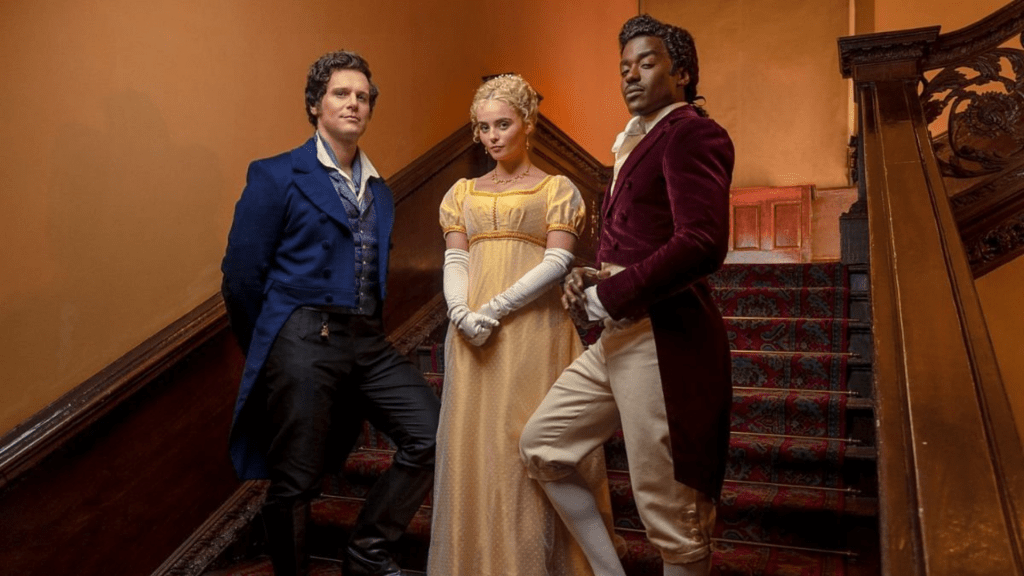
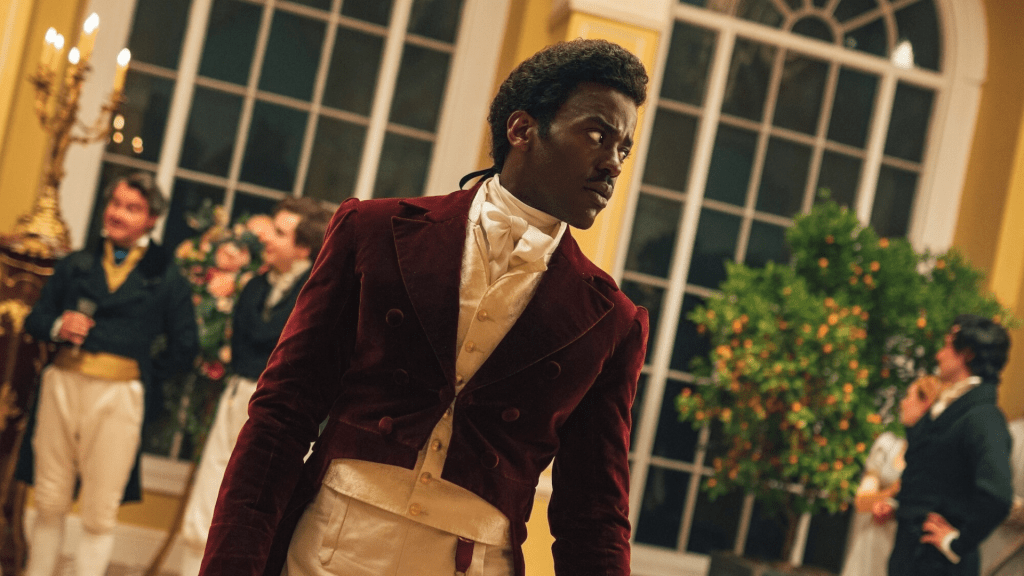
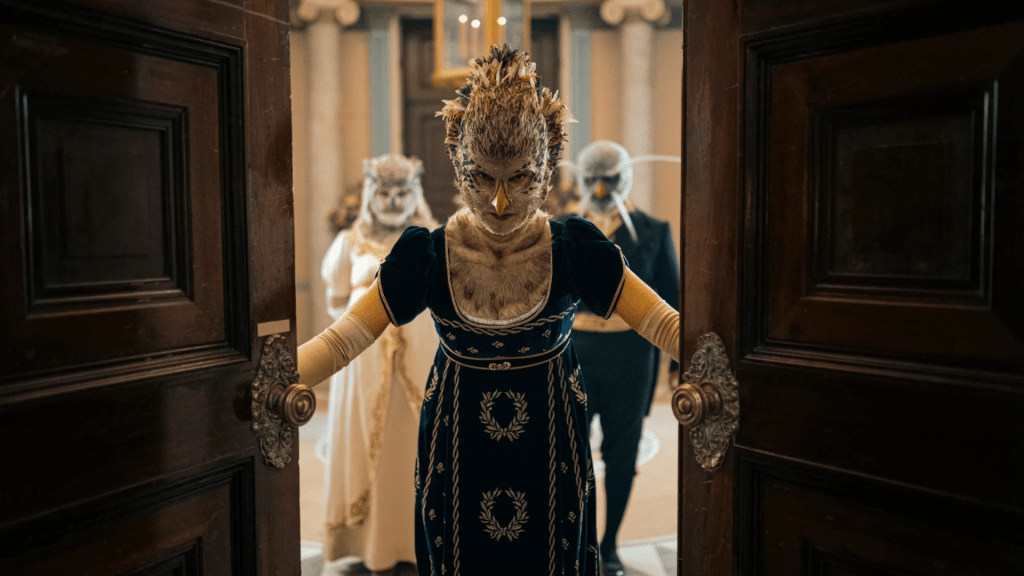
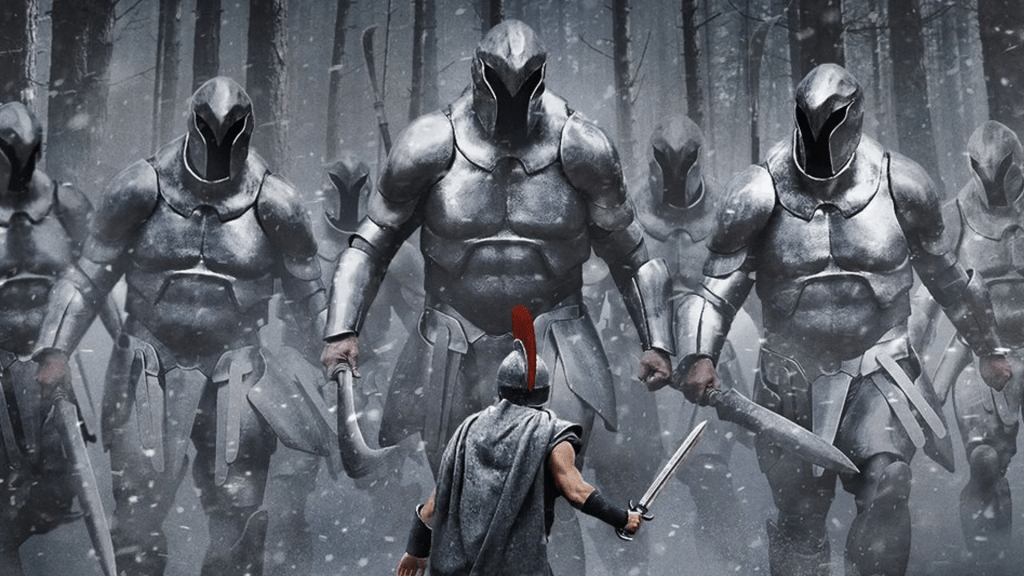
Though on the surface, Rogue might appear to be more traditional in design (it is an historical romp, after all), this is quite a remarkable and rebellious instalment. Not only was it the show’s most visible exploration of the Doctor engaging in a same-sex romance in its then 61-year history, it also managed to utilise worn-out tropes in a manner that felt refreshing. The way in which the Chuldurs essentially take the superficial, theme-park history approach of a standard historical romp and had it be a game the baddies were playing felt like a genuinely refreshing take. Doctor Who often tends to trivialise the history books, transforming complex segments of Earth’s past into pretty costumes and fancy sets. Rogue does the same, but makes it the sole point of the villain’s antics. They are quite literally cosplaying, using history to act out a sadistic game of romance, drama and death. They weaponise the very cliché that often makes these sorts of scripts feel unimaginative and tired. Writers Kate Herron and Briony Redman aren’t simply treading on trodden ground here; they are turning cliches into actual toys for the episode’s threats to play with.
Then there’s Rogue himself, a character who feels like a genuine bomb igniting at the centre of this show. Whereas most episodes have the Doctor fall into people’s lives and transform them, here, we have a character who falls into the Doctor’s life, presenting our protagonist with a new and unfamiliar role to play.
Rogue is a thrilling 44 minutes of television. Yet for all its brilliance, there is a wider problem present here. It’s a problem I don’t think is exclusive to the script, nor do I think it’s a problem presented by the main body of this story. It’s also a problem that reveals a wider, era-spanning issue at the core of this franchise during this period. Because much like the preceding two episodes, Rogue is Doctor Who doing something remarkably unique, only to have that uniqueness be undone by the time its end credits have rolled.
The key to Rogue’s status as a radical episode is in the character himself. Funnily enough, his uniqueness is something that can be found in characters from the show’s past, albeit in slightly different flavours. There are similarities here to Captain Jack Harkness and River Song. I say this because Rogue is essentially a character that feels as though he’s the lead in another, non-Doctor Who science fiction show. Unlike the usual residents in an episode’s world, or the audience surrogate usually allocated to the companion, Rogue is a character from another fictional space. He arrives with an independent (albeit obscured) history, his own lore, a set of rules unique to his journey, and a high-concept he is already familiar with. Whereas Captain Jack was a conman seeking revenge upon an agency that wiped his memory under mysterious circumstances, Rogue is a bounty hunter who travelled the stars with a partner whom he’s lost. In a similar light, whereas River belonged to a cosmic romantic thriller, Rogue belongs to a lofty space opera.
Jack, Rogue and River aren’t quite the same as your standard Doctor Who companions. They represent a more heightened, fantastical dimension to the show. They arrive with their own toolkits of knowledge, gadgetry and rules. Whereas Ruby, Rose, Amy and co. act more like point-of-view characters for audiences to relate to, these fantastical companions act more like gateways to other alien worlds. This creates more of a Yin and Yang dynamic. The point-of-view, earth-based companion is the Doctor’s bridge to the everyday, whereas the fantastical companion becomes the Doctor’s connection to the otherworldly. This creates an equal footing for the Timelord, pairing them up with a companion from a non-Doctor Who show, as well as one from the “real world”. No longer is the character merely explaining the rules of Doctor Who to their mate from 21st-century Sheffield. They are furthermore addressing the threats of the universe with a guest star from a hypothetical sci-fi flick from a neighbouring channel. All of which adds a unique flavour to the show, an additional dimension that opens up new doors and ways of having our characters interact with the stories.
It could be argued that companions such as Jack, River, and, in this instance, Rogue, risk diluting Doctor Who as a brand. If these really can be read as protagonists from another, non-Doctor Who show, then could they run the risk of turning this programme into something that looks and feels more like Farscape or Guardians of the Galaxy? I’d argue that Doctor Who actually tends to have a somewhat unique effect when it comes to smashing concepts together. Usually, when you collide this programme against a differing genre, series or film, it has a tendency to devour that concept, before transforming it into something new.
Take 2005’s Rose as an example. Davies’ debut episode started as a soap opera about a girl at her wits’ end. She was fed up with her job, had a boyfriend who treated her poorly, lived with a mother who wasn’t doing a great job of bigging her up, and had a pretty unfulfilling life. Yet by the end of the episode, Rose completely retooled the soap opera genre into a domestic invasion thriller about killer shop window dummies! Each time we returned to that setting going forward, it wasn’t EastEnders 2.0; it was an alien invasion story or a political thriller about aliens masquerading as politicians. Doctor Who had rooted itself deep into the DNA of the genre before rewiring it into something that was more in line with its own image.
When Jack entered Doctor Who, this was the very effect the show had upon his inclusion. He may have started as a morally questionable space cowboy, dashing about time and space with stolen space tech, yet he quickly transitioned into the sci-fi literate darling who became comfortable acting as the Doctor’s right-hand man. He even knew all about the Daleks! River’s entry was a little more successful in bending the rules of Doctor Who in her “show’s” favour, but even then, Doctor Who won out. Her presence transformed the early Moffat era into a high-concept, non-linear puzzlebox which invited viewers to piece the jigsaw together as the series progressed.
Doctor Who doesn’t simply allow these kinds of companions to come aboard and rewrite the show in their own image. Instead, they serve as invitations for the programme to mutate and evolve into something different without risking it from becoming generic. They are upsets to the status quo that fall into the Doctor’s world in the midst of a series, offering the show with two options: embrace its alchemic destiny, or hit the reset button before it’s too late.
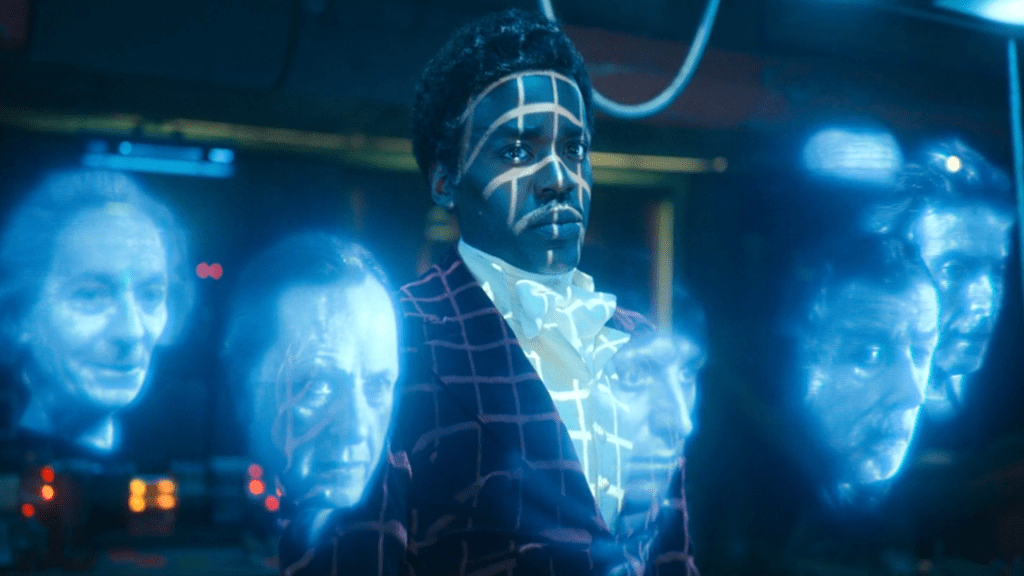
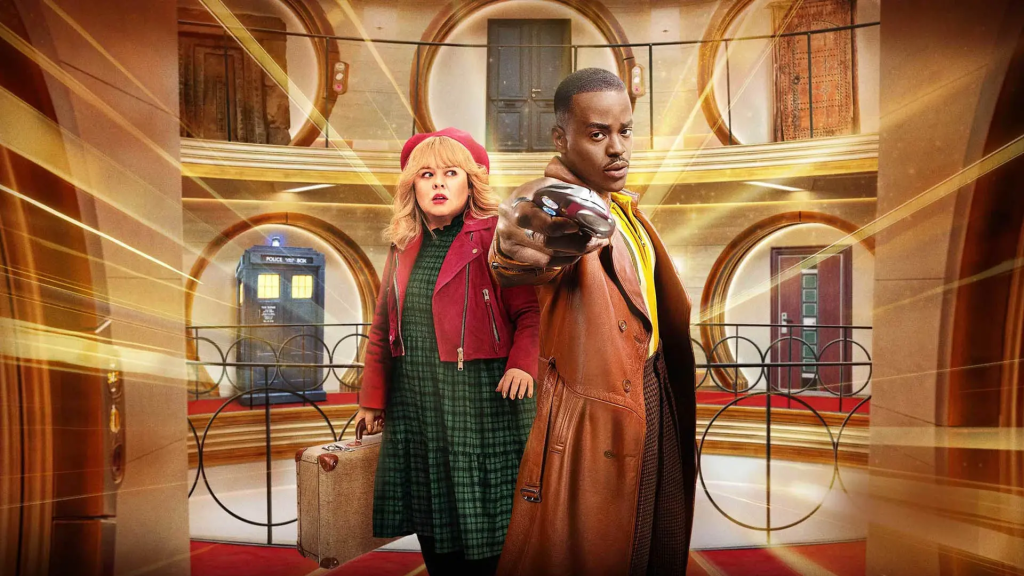
In the context of Rogue, his inclusion brought the potential for a companion who’d arrived from a romantic space opera. A lofty affair in which love and lust unfold across the stars. Much like River Song, he would serve as an equal to the Doctor; a character with romantic potential, plus the ability to bypass the Time Lord’s smarts and get straight to his heart. Furthermore, Rogue also humanised the Doctor a great deal, bringing forth the man behind the myth.
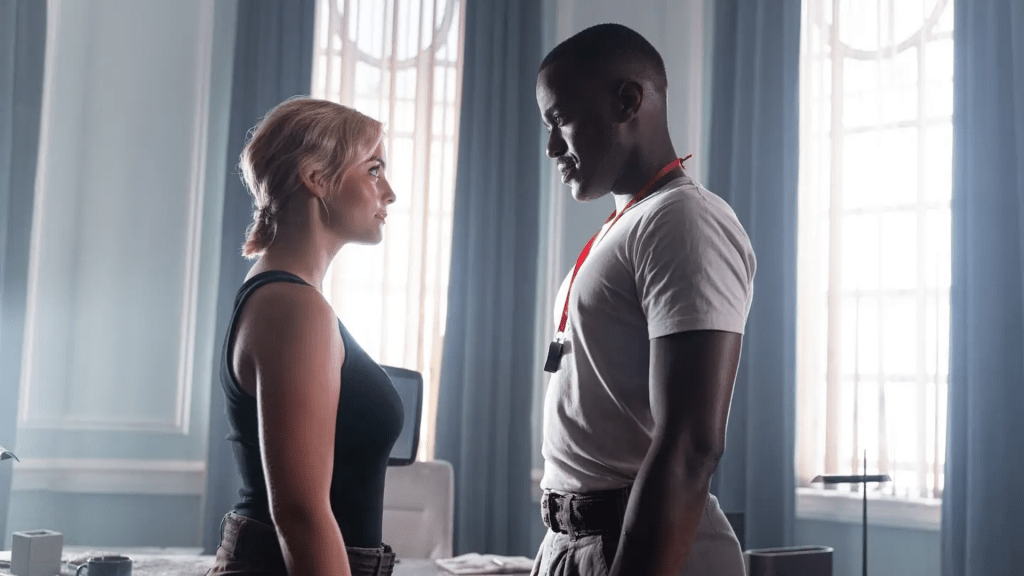
There’s a scene where we see the Doctor do something similar to Rogue, albeit on a more literal level. During the scene where Rogue is planning to execute our hero due to his assumption that he is the Chuldur threat, the Doctor outs Rogue’s love for Kylie Minogue and Dungeons & Dragons. Although Rogue doesn’t get his own back in what you could call an on-the-nose manner, he does manage to do it on a deeper, more emotional level. He allows the Doctor to let his guard down, fall victim to lust, and even contemplate travelling with someone he has the potential to be openly romantic with. In the past, romantic interest with companions such as Rose has often been hidden away behind body language and repression. Even with River, the romance was kept strictly off-screen, hidden away from both companions and audiences. Yet here, the Doctor is face-to-face with someone he seems comfortable expressing romantic emotions with.
And the episode actively flirts with the idea of making this a new permanent fixture. A combination of Jack and River, the Farscape-inspired intergalactic cowboy who not only brings gadgets and charm, but one who could serve as the Doctor’s romantic equal.
Now look, whether this is a great idea for the show is slightly more complex than I’m making it out. For one thing, removing the aromantic nature of the Doctor from the equation has been something the show has been criticised for doing since 1995. Whether audiences want the Doctor to fall in love is a conversation that lacks a universal preference. Maybe that’s the reason they decided to take Rogue out of the equation before the idea had time to go anywhere. Perhaps the reason this episode decided to hit the reset button was that they felt the romance risked making the Doctor too human.
But to assume Rogue would force the Doctor to be visibly romantic going forward is somewhat misleading. For one thing, who is to say that a relationship was guaranteed to blossom from the chemistry of these characters? There is a possibility that his inclusion could have served as the ultimate stress tests or our hero, one whose lofty space-opera antics could have forced the Doctor to reconcile some of the character development he’d gone through in recent stories. I say this because back in The Giggle, fifteen burst onto our screens with a new mission statement; the Doctor no longer suppresses their emotions. He encouraged fourteen to rest, process the trauma of his past, and actually address his pain before moving forward. Rogue is a personification of this very philosophy; a character who forces the Doctor to confront his feelings and not bury them under subtext or body language as he did with Rose and Yas. It doesn’t necessarily need to come out as an active romance, but it could force him to reconnect with how he feels toward those he cares for more explicitly.
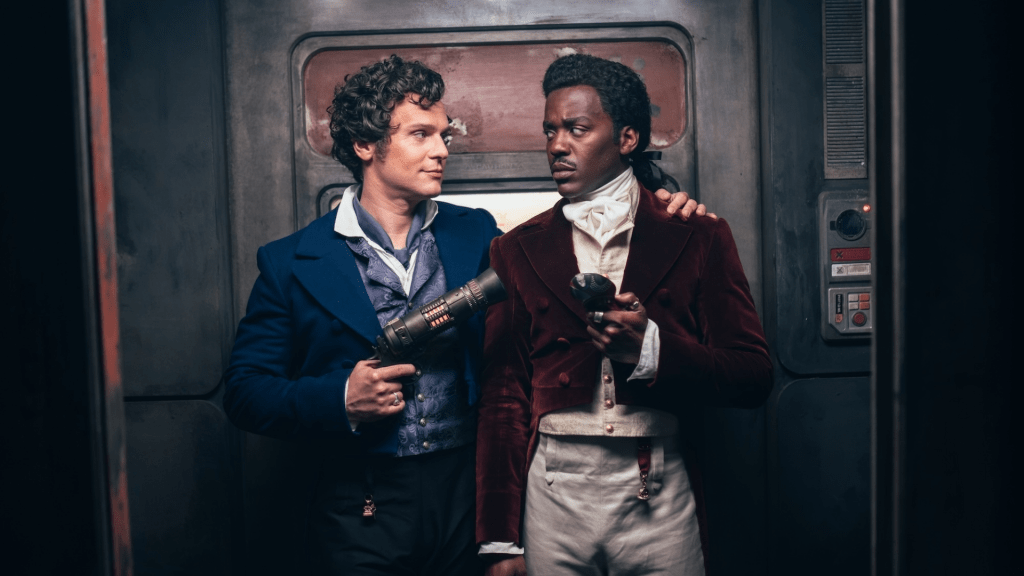
How this would have played out, had Davies decided to let Herron and Redman’s character escape the jaws of the triform trap, is anyone’s guess. Would it have mutated the show into a lofty, sci-fi ballet between two cosmic gods dancing across the stars? In an intergalactic will-they-won’t-they affair. Heck, perhaps their relationship would never have blossomed, causing the two to revert into platonic exes who decide to continue travelling together nonetheless. Despite the outcome, what it would have done was add a new flavour to the series, a flavour that could have helped give it an identity it felt as though it was lacking up until this point.
I say all of this because up until this point, the second Russell T Davies era has felt a little too safe for my liking. It’s not that it’s a carbon copy of what’s come before, yet it does feel like it’s been trapped in a fixed state that it can’t quite move past. Which sounds kind of nonsensical when you consider that the two episodes preceding this one were actually quite experimental by design. So what’s making it feel this way?
The answer, I suspect, lies in the fact that at the end of each episode, the script seems to trigger a reset; reverting everything back to the way it was before the episode started. And this is a problem I’ve been feeling since we had The Church on Ruby Road. That episode immediately followed a story in which the world had been brainwashed by a molecule-bending god from another universe. The entire globe had just been at war with one another on a micro-level. Planes had toppled out of the sky, and humanity had seen conflict on a scale it had never seen before. Yet by the following episode, it was as though that event had never occurred. Several episodes later, we had a story in which Ruby and the Doctor battled it out with a demi-god who’d erased culture from British history. Not only had history been changed, but the show had introduced a character who – much like the Toymaker – could warp reality. Yet by the following week, it was as if none of that had happened. Then we had 73 Yards, which dove into a character study on Ruby before literally undoing every second of that story.
And now we arrive at Rogue, a tale in which the Doctor falls for a man from the stars; a man who forced him to face the very philosophy this incarnation had preached the moment he bigenerated away from his fourteenth incarnation. Herron and Redman fashioned a fully-formed hero from a neighbouring, non-existent show who flirted with the idea of radicalising Doctor Who for the remainder of the Gatwa era, yet by the time all was said and done, he was assigned to the “would-be” pile of the show’s potential future. Rogue was never meant to be. He wasn’t a crossroads for the Gatwa era going forward. Instead, he was a stress test for the Timelord to endure for 44 minutes. His purpose was to have the Doctor experience another loss, only so he could then have Ruby remind him not to bury those emotions as he had done in the past.
As already mentioned, this really is a terrific episode. It’s one of the season’s highlights. Gatwa and Groff’s chemistry is electric, to the point that you can feel the romantic excitement fizzling from the television screen. Furthermore, there is something quite lovely in the idea of this dashing space man completely blindsiding the Doctor. There’s a thrill in seeing these two spacemen humbling one another, forcing them to engage with their more vulnerable sides. The disappointment lies more in the fact that we get the hint of a Gatwa era that never really had the opportunity to properly take shape. Instead, this vision only had the opportunity to tease itself within the confines of a 44-minute standalone before everyone moved on to busy themselves with the final.
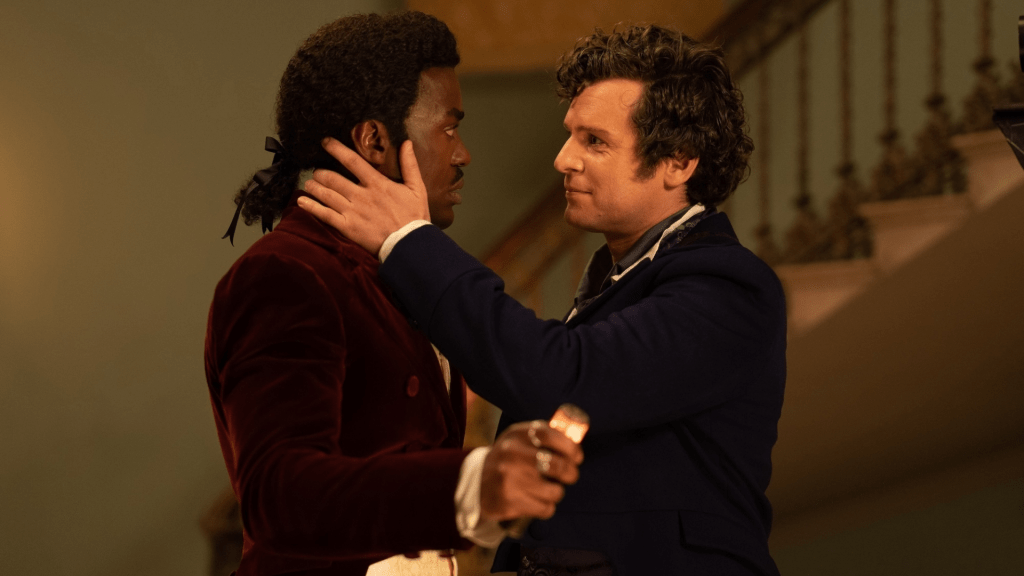
Perhaps there is an argument that the decision to have the Doctor pivot away from properly reacting to Rogue’s demise was a creative decision. It could be seen as a way to identify that fifteen hasn’t yet quite learned how to deal with fresh trauma in the way he’s able to process past traumas. We do get a hint of this at the end, where the Doctor attempts to handwave his upset, until Ruby embraces him. This tells us that despite his insistence during the 60th specials that he’s now someone who is more in touch with their emotional side, there will remain occasions where old habits resurface. By going from the loss of someone he cared about to taking on the big bad lurking in the backdrop of the season, perhaps Davies is trying to communicate that this Doctor is still learning how to cope. Old habits are hard to break, after all.
Nevertheless, going from an entry like this, straight into a penultimate story before we start everything over from scratch, feels like a bit of a cheat. Rogue felt special and fresh. Part of me wanted that specialness to head somewhere significant. Even if we couldn’t have a character like Rogue become part of the Doctor’s life on a full-time basis, then at least perhaps some kind of arc where he goes searching for him. Anything to make this more of a catalyst than it turned out to be.
Make no mistake, resets are a core part of Doctor Who as a show. Even the examples of River and Jack eventually left to make way for a refresh. Eras build themselves from the ground up, before radical demolitions become next on the agenda. Furthermore, episodic resets have also occurred throughout much of the show. Who can forget Lynda with a Y, Joan Redfern, and even Oswin Oswald (although that last one is slightly more complex, and perhaps suitable for another essay). I think what makes it extra frustrating here is that we are seven stories in to an era that is yet to give us a hint of where exactly it’s headed. The voice and philosophy of Davies’ second era haven’t quite crystallised. Sure, the quality of several episodes is strong it is starting to feel directionless.
In this context, Rogue is a brilliant albeit frustrating entry in a series that is still fighting to define itself.





 Amber Poppitt
Leave a comment