
Watching childhood favourites as an adult sometimes comes with its risks. A film you adored when your mind was fresh and impressionable can easily lose its gloss once your inner world grows more critical. Yesterday’s delights can quickly become today’s disappointments.
Going into Flight of the Navigator for the first time in almost three decades brought about such worry in my mind. Would I come out of the viewing delighted that the film still holds up in 2026, or would I have preferred to have kept the version of the film I remembered tucked away in the canyons of my memory? Part of me suspected the latter was likely to be the case, which is why I was surprised to walk away from this screening leaning more into the former. Although Flight of the Navigator is far from a perfect movie, I found myself moved and emotional on regular occasions.
First and foremost, it is worth noting that there is something of a contradiction with the film’s tone, which might make this a difficult pill for some to swallow, particularly if they are coming to it fresh as an adult. This does very much feel like two films that have been patched into a singular narrative. Yet while the conflicting styles crashing against one another are perhaps the most striking characteristic, I cannot help but feel there is something far more tragic, profound and consistent lurking beneath the feature’s tone and pacing; something which actually reduced me to tears upon my most recent watch.
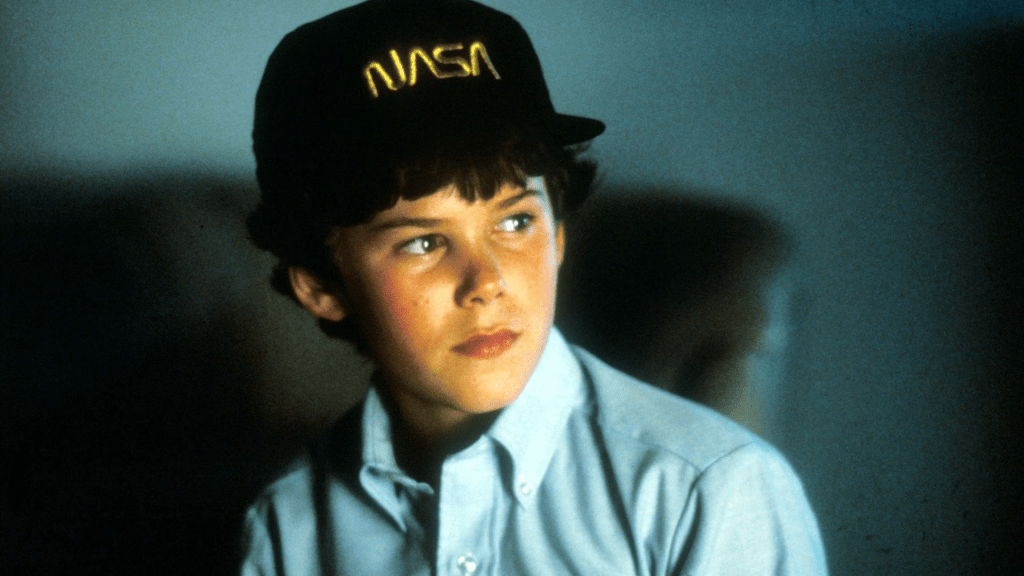
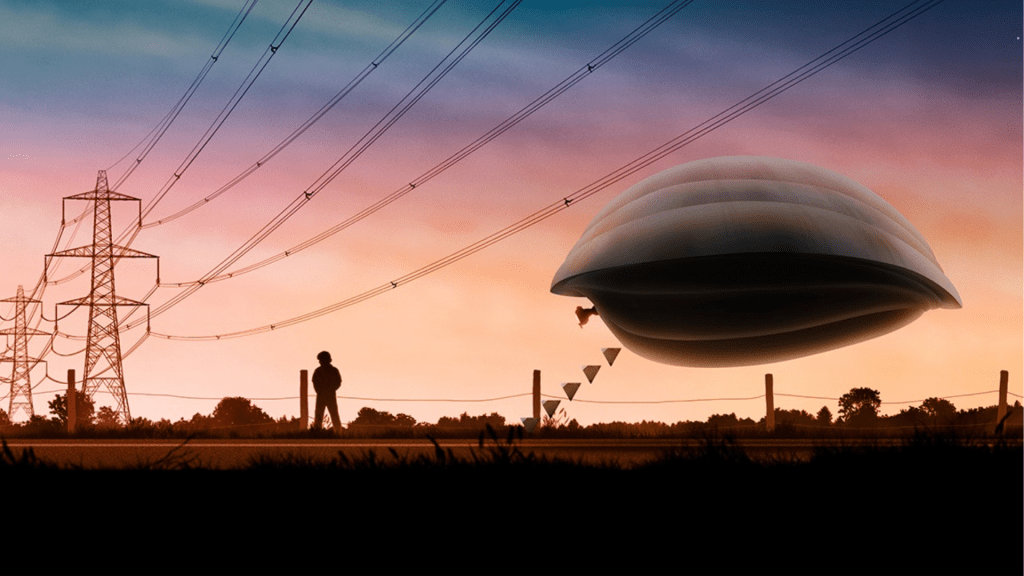
Flight of the Navigator begins life as a tense sci-fi thriller. Director Randal Kleiser goes out of his way to depict a story in which a young boy is plucked out of time by an unidentified flying object stalking protagonist’s hometown. One moment, David is in 1978, the next he wakes up in 1986, without having aged a single day. He then has to acclimatise to a world that’s moved on without him. His parents have aged and snapped due to the horror of losing their 12-year-old son in what was believed to be a fatal abduction, whilst NASA staff begin experimenting on David’s mind after learning it’s packed full of alien star charts. Meanwhile, the government have captured a crashed space vessel which appears to be communicating with David.
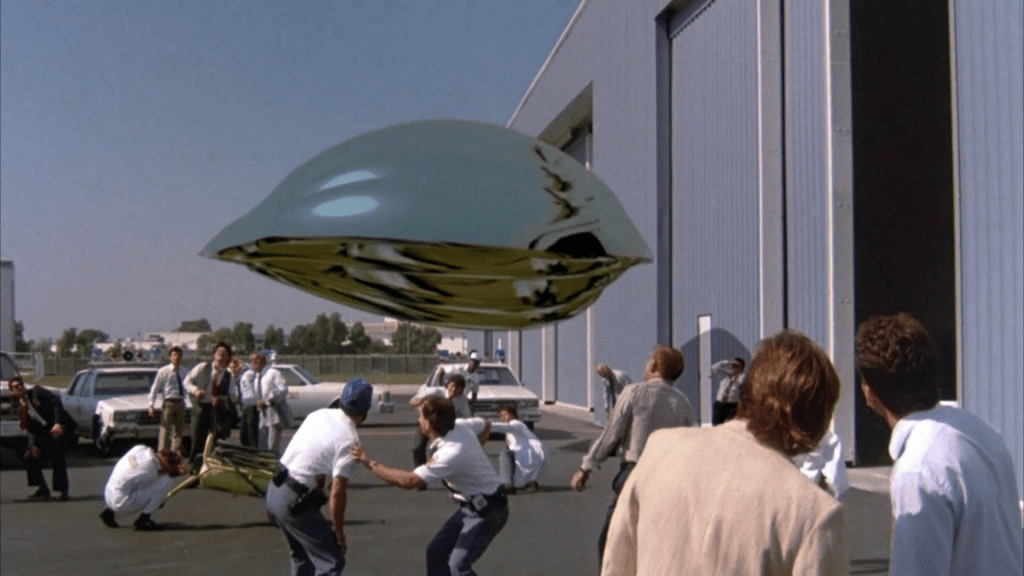
Once all of this is laid before us, we then get a sequence which managed to burn itself into my memory upon first seeing it back in the early 90s. Upon being instructed by the disembodied voice communicating with David from the vessel housed within the bowels of a NASA hangar, our hero climbs inside a delivery robot and stealths his way through the government base, all while Alan Silvestri’s synth-saturated Robot Romp belts away in the background.
From here on out, the thriller aspect of the film cracks, and a kooky 80s adventure bleeds out onto the screen. The eerie flick about UFOs and abduction is usurped by a fable about a kid befriending an extraterrestrial AI, bagging himself a cute space pet, and detouring around the world as he tries to make his way back to his family.
Out of the two, the opening is significantly the strongest part of this film. I’d even go so far as to say it’s brilliant, even by today’s standards. Kleiser manages to engineer a genuinely unsettling story by establishing David’s status quo – introducing us to his parents, his irritating younger brother, the pet dog he’s trying to train up, and even the crush he has on a girl from his school – before completely ripping that all away from our protagonist. Carefully painting a typical, suburban life for David, only to then have him wake up in a very different world, is utterly horrifying. The scene where David runs around his “home” only to find his room is now a library, and his parents have been replaced with an old couple who’ve never seen him before feels wrong and angst-inducing. We’ve seen all of these sets just minutes prior, yet they are completely alien. We can feel David’s panic as he’s racing around, trying to find something that will snap him out of this nightmare he’s fallen into. Such horror amplifies when David finally reunites with his mum and dad. Except they look just as alien as the redecorated sets from David’s former home. They are older, tired, and evidently burned. David’s expressions paint the disgust and confusion he’s experiencing, before he passes out from the shock of it all.
We don’t just feel David’s disgust as it unfolds before him, but we also feel his confusion. The information as to what on earth is going on is concealed from the audience, only being made clear to us as David himself finds out. We are just as in the dark as he is, not understanding where he’s been for the last eight years, and having no clue as to why a disembodied voice is whispering to him from the walls of the Government base he’s been shipped off to in the wake of his return. This creates a tension and unease, as we are forced to see this cruel and confusing tale as it plays out in a young boy’s mind.
Perhaps one of the reasons the second half doesn’t quite have the same bite as the opening is largely due to the fact that once David figures out where he’s been for the last eight years, and that the alien ship talking to him isn’t a threat, the tension is drained from the plot. Instead, it becomes a chase movie about a kid with a spaceship who is able to outrun governments and zip across the globe like he’s simply popping down to his corner shop. It’s just not as interesting, because there’s no mystery to keep the plot focused. It’s a film that felt sharp and atmospheric when it had a secret resting on the tips of its lips, yet as soon as it’s given an opportunity to speak up, it loses some of its allure.
That having been said, there is an argument that this frothy second half is more necessary than I’m giving it credit for. After all, this is a family film, and that opening is monumentally dark. It’s creepy and cruel in a way that could quite easily unsettle. Having a film that just functions as a thriller in which a family endure an otherworldly trauma risks tipping this movie into something that isn’t quite a movie for all ages. It would just become a feature length X-Files episode. If we take this into account, then it could easily be argued that the cute whimsy of the second half helps to balance the film. This is a tool that’s applied to similar films of this nature. E.T. The Extra-Terrestrial does something remarkably similar.
The opening act functions more like a horror about an alien creature stalking a young child, whereas the second and third act transcend into a fairy tale about a lonely trio of kids making friends with a telekinetic visitor. If E.T maintained the horror tone from start to finish, it would have been more like Spielberg’s aborted Night Skies horror than the film it ultimately ended up being. Part two of Flight of the Navigator functions as a “cushion” of lightheartedness, introducing puppeteered creatures like the Puckmaren, David zipping through the skies whilst dancing to The Beach Boys, and joyriding in the belly of a mail droid to balance the inherent darkness built into the foundations of the feature’s opening half.
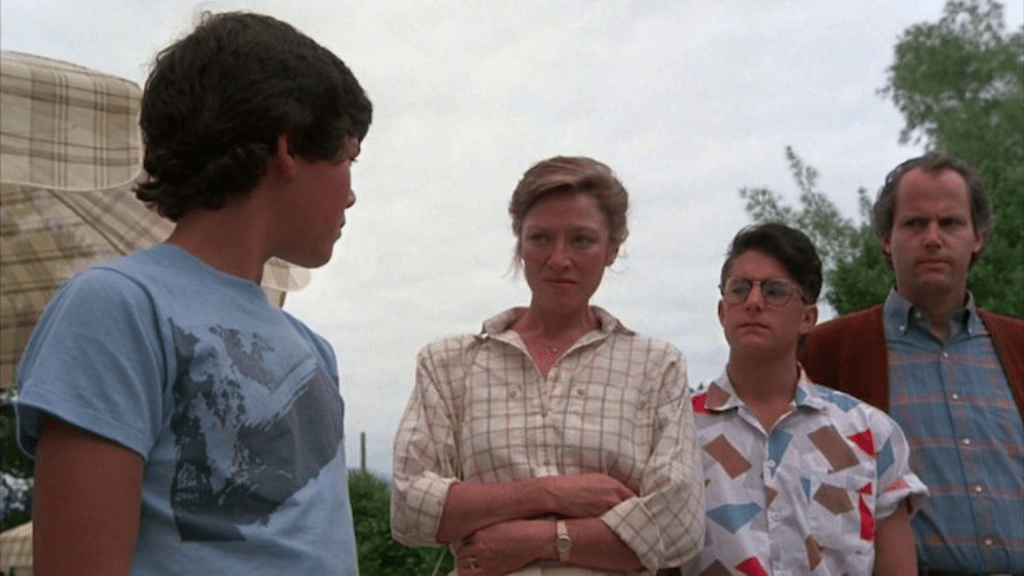
If we dig even deeper, looking beyond the thriller-turned-romp model of the film, there appears to be something even more devastating going on here; most notably in the tragedy of loosing the mundane. As already noted, Kleiser establishes David’s normality before throwing us into the sci-fi element of this story. What this also does is paint a picture of a young boy living what you could call a typical healthy suburban life in the 70s. David has loving parents and appears to be living a materialistically comfortable life. We see his parents take him and his brother out to the local park, go out for dinner in the evening, and take late night boat trips before bed. David’s dad even attempts to have a conversation with David after he discovers that he’s developed his first crush. We also meet David’s younger brother, who he doesn’t appear to get on with. David is frustrated, occasionally grumpy, and doesn’t appear willing to want to have awkward-albeit-well-meaning conversations with his dad.
This is all very typical for a teenager in David’s position, but there is also something utterly heartbreaking about all of this, because it’s a finite moment in this boy’s life, just as it is in the lives of most teenagers. One day, we all grow up, and those days of squabbling with siblings or sulking off to our rooms become memories. As people grow older, move out, have families of their own, and eventually lose parents to time, those days become days that are cherished; the moments that were taken for granted. Behind all the sulking and arguing, David’s family love him, and despite the conflict between him and his brother, young Jeff will eventually mature into a decent adult who’d have no doubt had a healthy relationship with David, had he been around.
Which is where the tragedy strikes, because as David is plucked out of time and thrown eight years into the future, the sadness of losing something he never knew he had won’t dawn on him gradually over decades, but in a matter of hours. He will lose the family he knew to the trauma of his disappearance. That day out would be the last one before everything changed forever. His parents would be forced to spend the next eight years coming to terms with the alleged abduction and presumed murder of their eldest son, whilst David would only come to see them as an aged and broken couple. He’d lose everything in the blink of an eye.

It’s heartwrenching and perverted. Watching David contemplate whether to stick around in this damaged timeline, or risk vaporisation by sticking with Max as he travels back to the past presents the ultimate dilemma for our hero. Does he risk death by time travel, or does he try to live in a world where his childhood has been taken from him?
Of course David goes on to choose the former. He ultimately decides that death is a preferable risk than living in a world where he’d never get to grow up with his family and where he’d be hounded by government officials. Instead he takes a gamble on his life, and returns to 1978. The timeline is reset and the trauma his family experienced belongs to an aborted timeline. Not only does he get to live out his childhood without the government chasing him or his parents broken and burnt out by the plot’s premise; he has a new-found appreciation for the love around him. He even gets to tell younger Jeff that he loves him, after having seen the kind young man he will inevitably grow up to be. He gets to experience his childhood with a lens of hindsight many of us wish we had as younger children. What I’d give to have been able to appreciate and realise what a wonderful person my brother is back when we were squabbling as young kids. How I wished I could recognise how much my mum and dad cared for me when they stopped me from staying out too late with my friends on summer evenings. The realisation that everything around David’s childhood isn’t unpleasantness, but parents doing their best to provide their kids with love and support – and that Jeff isn’t actually a nasty person, just a kid who’s yet to mature – brings him a level of growth and understanding he’d have never had if he’d not stumbled upon Max’s vessel.
Which is where I think the heart of this movie lies. Amidst all the eerie mystery and inevitable rompiness, there exists a film about a young boy who is snatched from his home, inadvertently destroys his family because of his absence, then gets a second chance to go back and live out his childhood from a place of hindsight.
It isn’t so much that Max changes him. Heck, you could even argue that Max is just a heartless AI that ruins a child’s life, mimics his consciousness for a bit, then chucks him through the vortex before the end credits roll. David’s life isn’t transformed because of the alien he meets in Flight of the Navigator, but because of the events that happen to him. The mystery becomes the catalyst that makes him see what he’s lost, whereas the romp is him trying to get home to his family.
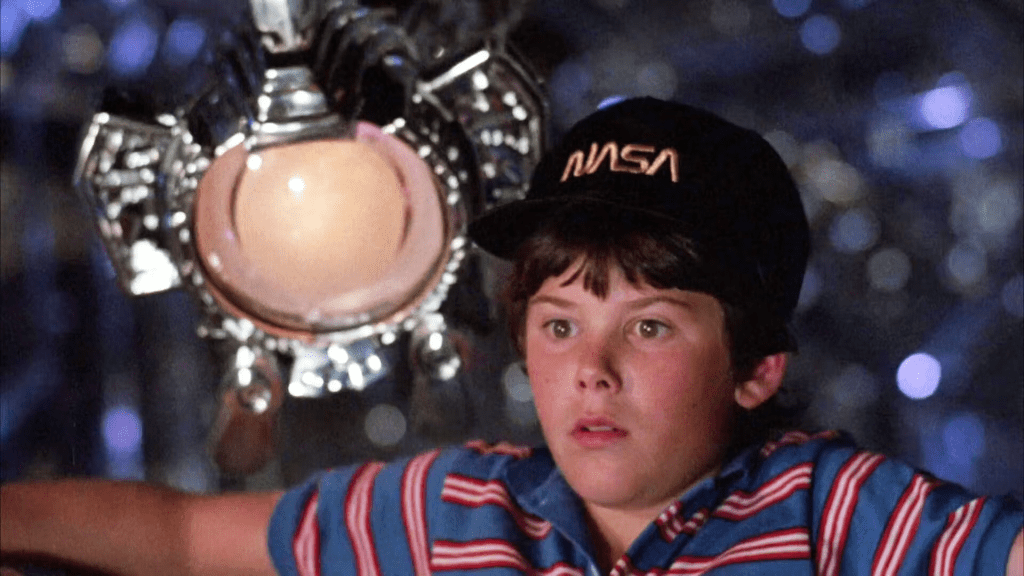
This is the emotional architecture which ultimately explains why Flight of the Navigator hit so differently upon rewatching it in 2026. As a child in the 90s, I was mostly fixated on the eeriness of that opening trek through the evening woodlands, the synth-wave adrenaline as David stows away in the R.A.L.F droid, and our hero dancing to The Beach Boys as he hovers above the clouds. Re-watching through adult eyes made me realise that the pivot from a cold thriller to a lightweight adventure serves as a cinematic mirror for the ways in which a child character possesses trauma. When faced with a cruel reality that is too dark to comprehend, the narrative, much like a child’s mind, retreats into play; turning an abduction into a comforting game of cat and mouse.
Yet the film’s ultimate catharsis doesn’t lie in the use of Max, the alien vessel, the squishy Puckmaren, or the outrunning of NASA. Instead it lies in the timeline reset. Ultimately, Flight of the Navigator functions as a science fiction ghost story which fulfils a bittersweet adult fantasy. It grants David a gift that time denies everyone else; the lens of hindsight before we grow old. He is allowed to return to the mundanity of his youth, stepping back into his childhood not as a grumpy, withdrawn teenager; but a wiser kid who values the love that is around him. Although we will never be able to pilot an alien craft back into the past eras we may have taken for granted, perhaps such a film can help us learn to appreciate those who loved us in our younger years a little more so than we did yesterday. Perhaps it can even help us learn to cherish and admire the messy-albeit-positive love that surrounds our own present right now; before it slips from between our fingertips.








Leave a Reply