

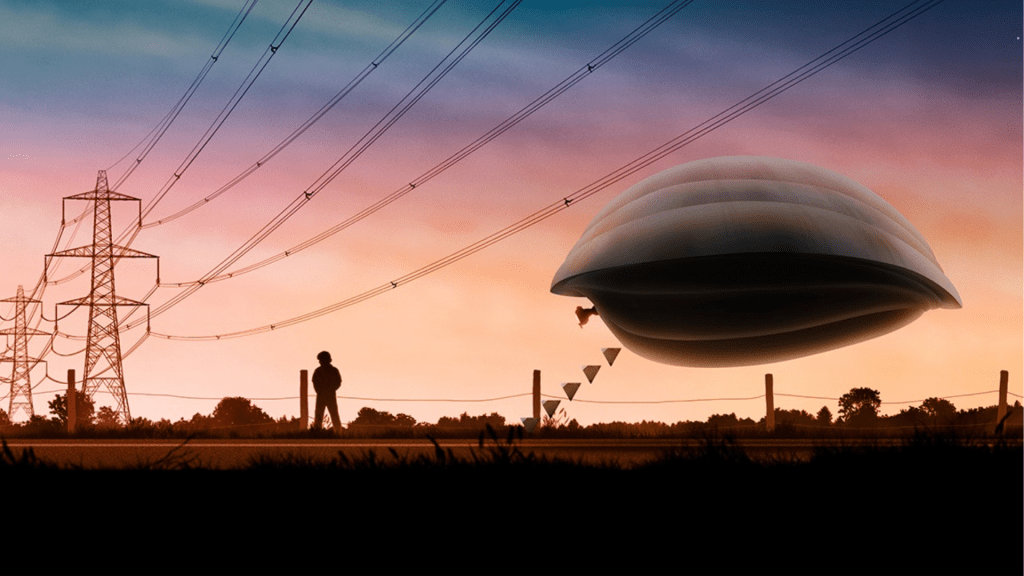
When news broke that director Steven Spielberg was returning to his first mainline UFO film in over two decades, excitement amongst moviegoers was inevitable. He is, after all, one of the primary forces in shaping how audiences have imagined what alien encounters might be like for the better part of half a century. While he may not have been the sole architect of the UFO phenomenon, his 1977 landmark Close Encounters of the Third Kind elevated fringe folklore into the mainstream consciousness.
In many respects, megahits like Close Encounters were always destined to play at least a part in the downfall of some of Spielberg’s future work . When you are the auteur of something so groundbreaking, new projects will inevitably be measured against the ghosts of your past. Even if future films are competent or entertaining, when looked at alongside a magnum opus, they are going to look flawed and faulty regardless.
I suspect this is part of the reason Disclosure Day is the disappointment that it was to a lot of folk. Being the creator of Close Encounters and E.T was one of the reasons why I came out of this one feeling somewhat empty. Those were hugely important films which shaped my fascination around the idea of extra terrestrial encounters as a young child. This was Spielberg’s genre; the one that can be traced back all the way to his earliest days. When he explores UFOs, he doesn’t just show us discs haunting the night sky, he shows us trauma, isolation, awe, and the joyous merits of imaginative wonder. They are films that manage to be deep dives into a filmmaker’s psyche, all whilst managing to be dazzling spectacles, a captivating and spooky public daydream about little green men visiting from the darkest depths of the cosmos. His return can only mean one thing for a fan like me; something beautiful, reflective and envelope-pushing.
But let’s not kid ourselves; Disclosure Day isn’t really any of these things. It’s a staggeringly mediocre and messy entry in this director’s canon, which feels like a disappointing addition to his UFO saga; one that doesn’t even come close to any of the mainline alien movies he’s made in the past.
I don’t think this is a terrible film by any stretch of the imagination. There are aspects to this movie I really do like. The chase sequences are fun in a way Spielberg has always excelled at. His use of fluid camera movement and long takes are laced throughout this entire feature, making the whole thing feel like a proper cinematic rollercoaster. There’s also an inherently great idea at the heart of this story, in which the government fight to stop a civilian from leaking evidence of alien life; an idea that not only explores contemporary themes of whistleblowing, but also asks questions about the political and religious implications that this may have upon the world.
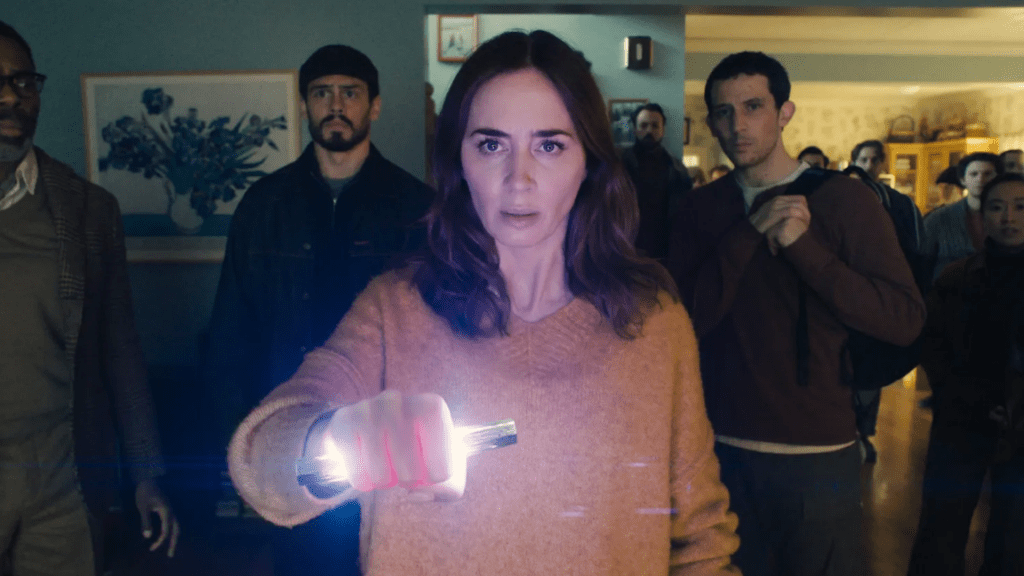
Disclosure Day also doesn’t give us definitive answers to those implications either. It doesn’t simply say that alien existence will eradicate religion, or bring about world peace. Instead it flirts with the idea of a more nuanced outcome. There are members of the church who actively engage in the idea of life from beyond the stars. There’s also legitimate fears expressed in how disclosure may well exacerbate political tensions as opposed to nullifying them. Whilst the film does strongly lean into the idea of it helping us lift the lid on the modern geopolitical pressure cooker, it doesn’t actively come out concluding that this is the case. It is a little less clear cut and more ambiguous on all of this, which I like. We don’t fully know how 8 billion psyches would process the existence of non-terrestrial beings, which Spielberg seems to appreciate.
The ending sequence, in which we see footage of alien life from across the 20th century, is a gorgeous moment in isolation too. Considering that Spielberg is a lifelong believer in alien life, there is a passion which seeps through in the execution of these scenes. This is footage he has fantasised and fixated about for decades, way back when he was just a young boy. This passion brings a level of detail to the pacing and visual style of this footage that’s a pleasure to watch. Truth be told, I didn’t want this sequence to end when the tapes started rolling. In that moment, I wanted to be a bystander in this fictional universe; drinking in the terabytes of footage being pumped into everyone’s living rooms.
Lurking deep within this project is the potential for a genuinely gripping political thriller about a man with a backpack full of data containing the potential to shift the trajectory of human history. Had it been retooled, tweaked and somewhat simplified, it could have been far better than what we ended up having. It wasn’t necessarily doomed from the start. There are flickers of awe and greatness here. They might be difficult to spot, particularly when disappointment and frustration start to seep in, but they are there, glistening amidst the chaos.
Truthfully, the film is a bit of a shambles; one that often feels like a first draft more than anything else. Upon discovering that David Koepp produced a staggering 42 drafts for this screenplay, it reminded me that overcooking screenplays can often have the same effect as someone hashing out a plot on the back of a serviette before yelling “ACTION!”
Apparently, 42 revisions was the most Koepp had ever done in his entire career. His reason for polishing with such persistent vigour was largely in part thanks to anxiety. The general treatment for this project was dreamed up by Spielberg, who’d been carrying this particular idea about in his head for decades. Koepp recognised how personal and connected to Spielberg this story was, so he didn’t want to make a pig’s ear of it. So on he went, tweaking and refashioning it; hoping the fastidious attention to detail would transform this vision into something dazzling.
What a cruel beast irony can be, particularly when you consider that the script is perhaps the core problem with Disclosure Day. I mentioned above that Spielberg’s legacy was “part” of the problem. It was, but it wasn’t the only one, nor was it its most striking. I say this because in addition to the choices of its director, screenplay equally feels convoluted and confused; often stumbling over itself as it attempts to create a layered and compelling thriller.
At a foundational level, Disclosure Day is a chase movie in which our heroes race from point A to point B before confirming the existence of alien life to humanity. It’s quite simple under the hood, yet Koepp and Spielberg (on the basis that he signed off on it) want to try and make this more engaging. New plot elements are thrown in at every opportunity; utilising clunky plot MacGuffins that throw bizarre conscious hopping, invisibility and energy-production super powers into the mix. If the plot needs the baddies to find the goodies, out comes this enigmatic device. If our protagonists are surrounded by an army of FBI agents, there it is to make everyone invisible so they can save the day. It becomes Koepp’s get out of jail free card; his secret weapon to ramp up the stakes before writing himself out of the corner he’s backed himself into.
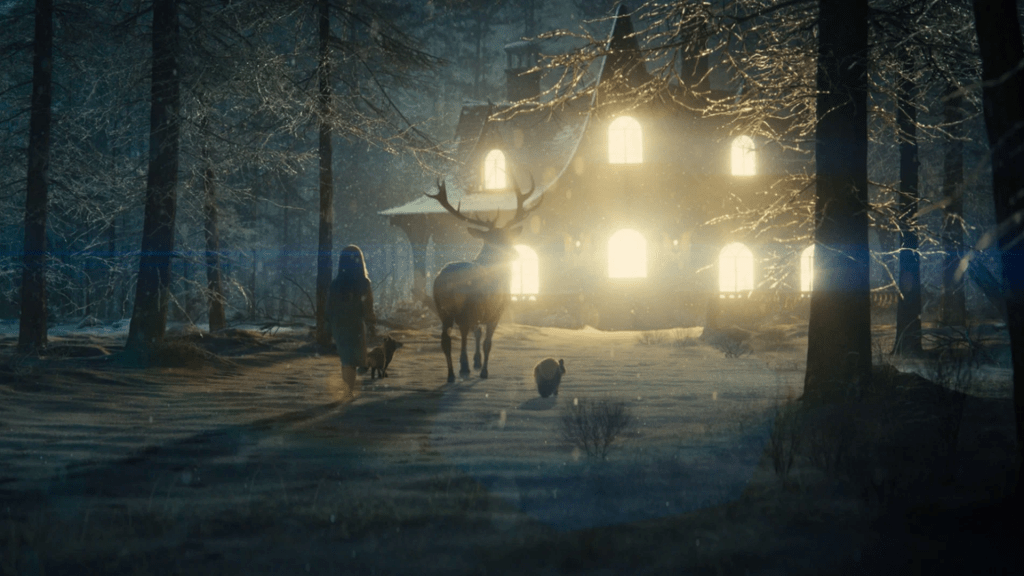
There’s also a peculiar b-plot in which the film’s leads, Margaret Fairchild and Daniel Kellner, were gifted with some magical alien superpowers as children. There is something whimsically Spielbergian about this decision, giving the aliens that fairy-tale charm we’ve seen in earlier movies. We even get quite a striking image of a young Margaret being led to a Hansel and Gretel house by a bunch of CGI woodland animals. The issue is, these threads don’t really play much of a part in the story as a whole, functioning instead as quirky and peculiar additions to what feels like they belong to a different story altogether. They feel tonally inconsistent with the grittier, more grounded story that Spielberg is evidently trying to tell here. The story shifts from a boots-on-the-ground race against the clock, to Hansel and Gretel houses in the woods and a shape-shifting Emily Blunt providing therapy to government agents. The tonal whiplash this causes turns chunks of this movie into a comedy, which makes it all feel a little embarrassing when you realise Spielberg doesn’t appear to be going for laughs.
Placing all of the blame upon David Koepp’s angst-induced drafting and Spielberg’s back catalogue would be unfair. I say this because I feel there is a larger context to why this movie doesn’t quite work here. It’s the product of another era.
As someone who was glued to the Discovery Channel during the 90s, I know that once upon a time, unidentified flying objects and alien abductions were all the rage. In a post-Cold War and pre-9/11 climate, UFOs became fertile ground for government skepticism. The West’s big bad vanished, the Middle Eastern wars and Bush administration-based conspiracy theories had yet to dominate the public’s imagination, and the birth of consumer internet gave UFO researchers and conspiracy theorists their first taste of building digital echo chambers. It was an era where technology allowed a dreaming nation to build a compelling folklore; before the real-world anxieties of the 21st century yanked everyone back into the very real geopolitical threats which persist to this day.
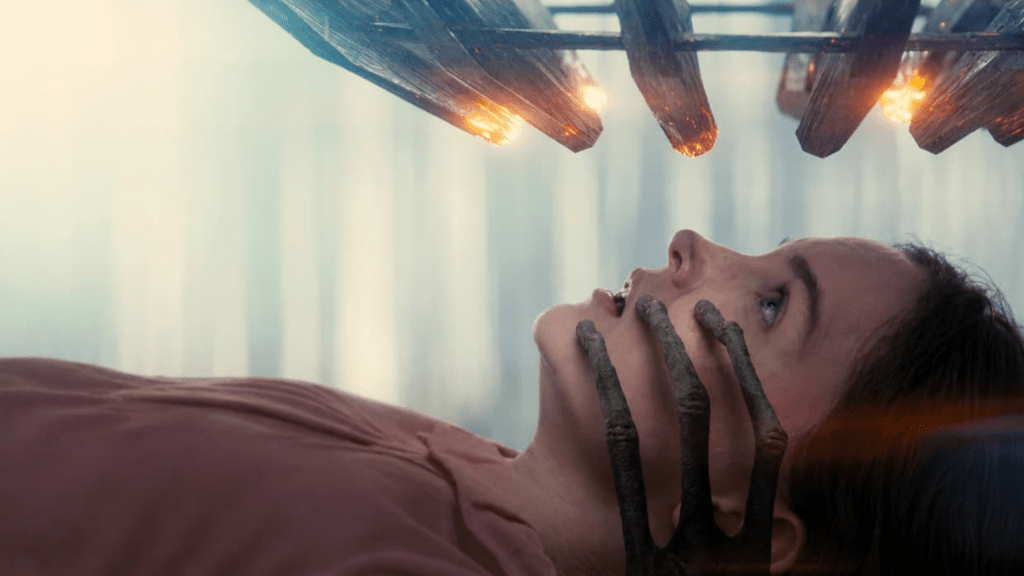
Had Spielberg released Disclosure Day back during this era, I suspect the reception would have been much different. The flavour for political thrillers in which shady government officials chased after civilians with a backpack filled with evidence of alien visitations would have been thrilling to the average movie goer. It would even make the whole “we must broadcast this on national television” plot objective all the more believable. As Pop Culture Detective points out in one of his recent YouTube shorts, are we really meant to believe that the general public would take a broadcast of this nature at face value in 2026? Most would handwave it as “fake news” or the result of a bundle of AI prompts!
We live in a world where we’ve seen the elements of this story play out dozens of times over in other texts. The X-Files has come and gone on numerous occasions, we’ve had an entire franchise starring Will Smith and Tommy Lee Jones lovingly parody this very idea, and Spielberg himself has already perfected this concept all the way back in the 70s. Nothing here is fresh or revolutionary, which would explain why Koepp has tried to spruce it up with shoddy MacGuffins and whimsical superpowers gifted to protagonists.
I went into Disclosure Day hoping that I’d love it. As a huge Spielberg fan with a particular admiration toward his alien features, this is the sort of film I’d been crying out for. As the world continues to boil and burn, a doorway back into an imaginative world from a more naive time is just what was needed.
Disclosure Day’s failure to whisk us back to such a world was caused, I believe, by a concoction of corrosive ingredients. It is a film made 30 years too late; presenting itself in a world that has moved on to different, more sobering matters. We’re frightened about nuclear war, the climate crises, the resurgence of fascist regimes, and fears of World War Three. It was also cooked up by a director that we’ve become accustomed to delivering the absolute finest when it comes to this genre. Sure, Indiana Jones and the Kingdom of the Crystal Skull was a let down, but Spielberg didn’t want to put aliens in that one, so it doesn’t count. All of which led to an angst-ridden script that was desperate to appease both its director and a public that had seen it all before.
The final result is a film that tries desperately to be relevant, revolutionary and engaging. It almost succeeds in that by delivering a solid David and Goliath chase movie. Had it been more confident and slightly less overcooked, it could have been an above average flick. Instead, it’s a messy, failed attempt by a director who revolutionised the UFO genre.
But there are positives I’ve taken away from this movie. For one, it has reminded me of the reasons I love stories of this nature. Once upon a time, I would gawp up at the night sky, convinced there were unknown beings gazing back down at me. Every flashing light, peculiar sound from nearby woodlands, and unexplained accounts would both horrify and captivate me in equal measure. These stories hint at a whole other world, lurking beneath the mundanity of the every day. I suppose that’s what makes UFO conspiracies so appealing; the fantasy of a grand exciting story existing on the periphery of the world as we’ve grown to understand it. Disclosure Day has taken me back to those younger years, where I yearned to believe that there were impossible beings stalking the skies above my home. It might be an echo of a bygone era, but it’s enough of an appealing echo, nonetheless.
Am I sad that this is now a part of Spielberg’s filmography? Absolutely not. All directors have their peak. As a creator who has already had so much to say within this fictional space, he does not need to prove himself anymore. If he wishes to tell a dated story solely because it piques his interest, then I’d argue that he deserves it at this stage in his career. None of this takes away from the brilliance of Close Encounters or E.T. Spielberg evidently loves crafting fables such as this one. Even its faults and failures have clear root causes. He’s a man who wants to return to a world he’s been fascinated by since he was a young lad, gazing at meteor showers with his father.
It may not be perfect, but its existence makes sense.






Leave a Reply