
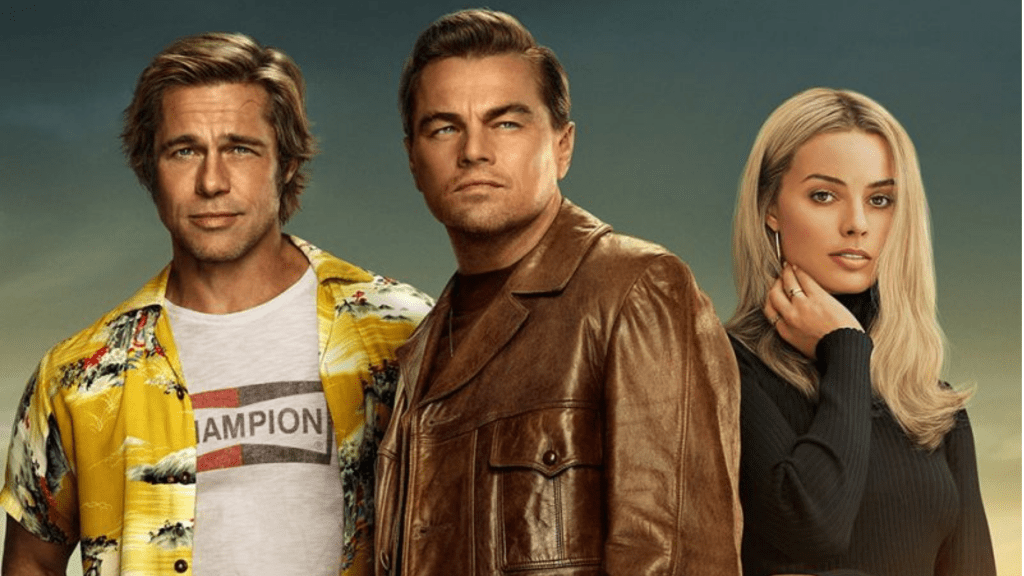
Over the last couple of months, I have become obsessed with the idea of re-editing commercially released movies from the comfort of my own study. I haven’t actually started cutting any footage yet. Instead, it’s more of a mental exercise at this stage. A daydream that lets me reshape existing films in my mind’s eye. This obsession kicked into gear after watching a fan edit of Prometheus and Alien: Covenant. By merging and scaling down two highly flawed features into a single cut, the edit demonstrated a well-paced, narratively compelling version of these movies. It was a fun reminder of just how powerful editing can be under the right circumstances.
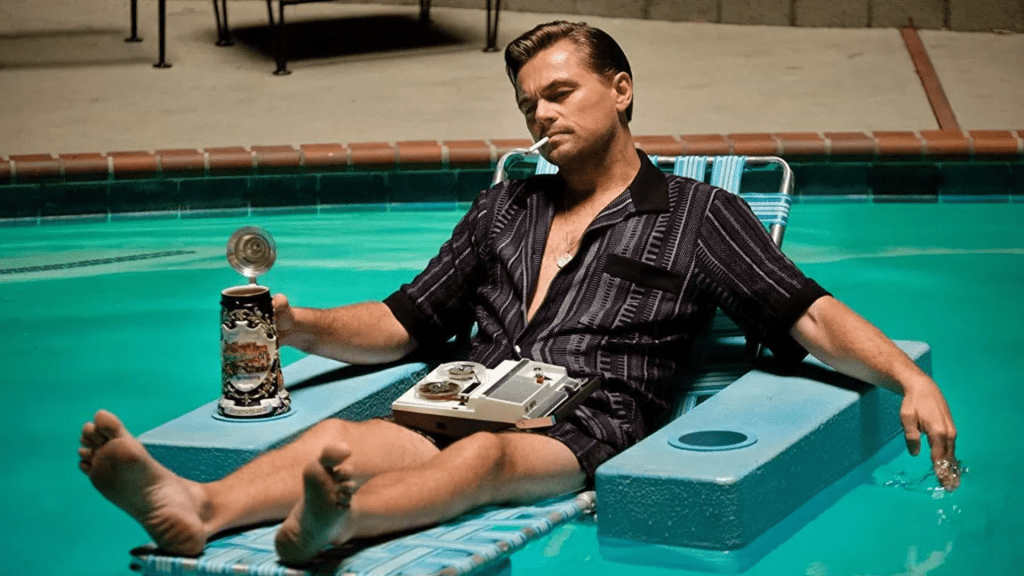
So, when I sat down to rewatch Once Upon a Time… In Hollywood this weekend, I was excited to view it with this fresh new hypothetical editor’s cap perched firmly upon my head. As I did so, I immediately started identifying entire chunks of the movie which I figured could have been trimmed down from mere minutes to a matter of seconds. For instance, a quick cut directly from Cliff Booth jumping into his car at Rick Dalton’s sublime Hollywood abode, to him pulling up outside of a rundown trailer park would have instantly established the two worlds these characters occupy when they are not in one another’s company. Instead, what the film gave us was a hefty extended segment in which we see Cliff race through 60’s Hollywood, joining the freeway and making his way back home. While it was a gorgeously striking shot, it didn’t exactly add a huge amount to the overall story being told. If we were being economical with the filmmaking, it would have been gutted long before the film was released.
This habit of Tarantino opting to stay on a single character as they transition from one space to the next was something I noticed occurring a lot throughout this movie. Endless shots of characters walking or driving about, listening to their car radios whilst navigating through mid-20th-century America. At first I felt like a smart arse, happily thinking about a version where I sliced all these moments out to make a more economically efficient narrative; heaps of footage that could be removed to make a movie far shorter than its theatrical 161-minute runtime.
But here’s the thing. As I sat there considering gutting out Cliff Booth hurtling through the 1960s, or Sharon Tate skipping across a road to visit a bookstore she regularly frequents, I began to feel uncomfortable at the thought of doing it. It was as if the very act was an act of sacrificing a larger purpose for the sake of pacing.
And you know what? If I was lucky (and talented) enough to be Tarantino’s editor, I’d feel genuinely conflicted about the job I’d been paid to do. Reason being, a great deal of Once Upon a Time… In Hollywood feels slow, sluggish and deliberately drawn out, and I think that’s a very deliberate choice. This doesn’t simply happen during the scenes where characters transport from point A to point B. Even the moments where the plot actually starts to head in a specific direction tend to drag on for extended periods, giving scenes time to establish themselves and drift into new territory. For example, there is a full 20 minutes of this movie which is dedicated to Rick Dalton struggling to remember his lines whilst shooting a western serial he’s guest-starring in as “the heavy”. This sequence sees him gradually begin to derail mid-performance, experience an intense meltdown in his trailer, and finally manage to refocus himself for the climactic scenes of the shoot.
It is a set piece which allows itself time to breathe. Although there were some segments that were visibly trimmed down. One example being when Rick is first introduced to James Stacy, which was originally a single long take of the two talking, but was visibly sliced down, deliberately leaving in the continuity jumps mid-conversation. Beyond that, however, the scene remains oversized by typical filmmaking standards, and while my inner editor wants to yell “CUT!” on numerous occasions, I cannot help but feel this would be a bad idea. This is because this sequence just so happens to be one of the best scenes in the movie. The way Tarantino opts to let the sequence play out like a genuine western, only breaking the illusion when Dalton fluffs his lines and triggering a reset, is spellbinding. Tarantino utilises the pacing to lure you right on in, immersing you within Dalton’s inner world, then startling us whenever he breaks character. You are right there with Dalton, absorbing his performance and the world of his script, before being snapped back out by a forgotten line. As Dalton’s performance malfunctions, so do the wider storytelling mechanics. The sound of the camera dolly and director bleed into the diegetic soundtrack, reminding us that it’s not actually a Western we are watching. It is both deeply uncomfortable and exceptionally revelatory.
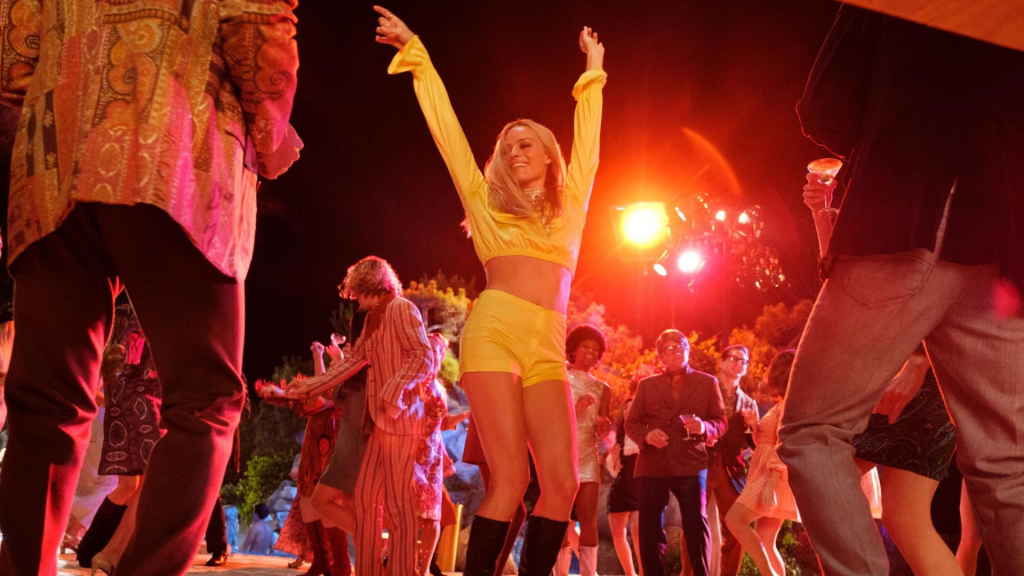
I believe something similar is happening during those transition shots of characters driving through Hollywood. Tarantino is choosing to shoot all of those scenes like someone flicking through the camera options in a Grand Theft Auto game. One minute we are in the backseat with them, listening to authentic, period-accurate radio stations; the next, we are in a wide shot, indulging in the sights of period-accurate architecture as it flies past their vehicles; then, we are hovering above their cars as they glide down the Californian freeway. During these scenes, we are invited to drink in the world that Tarantino has built. We aren’t just seeing a CGI-painted snapshot of 1960s America; we are being invited to be devoured by it. We are right there with our heroes. On occasion, it feels like we are peering through the window of a time machine, or at the very least, a meticulous simulation of an era that has long since been lost to time.
But let’s pour cold water on all of this for a few moments, shall we, because much of this does feel wildly indulgent, if we’re being honest. It feels as though we are watching a director meticulously rebuild a world and version of American filmmaking that no longer exists, largely to scratch an itch in Tarantino’s brain. He is evidently in love with this era, so much so that he’s now made an entire movie to preserve his perspective of it. He wants to immortalise a nostalgic retelling of the past which never moves on like the real 1960s did. The film even ends with him literally undoing the very brutal, real-life murder of Sharon Tate and her friends on the eve of August 9th, 1969.
On that fateful day, failed musician Charles Manson sent members of his Manson Family cult to the former house of record producer, Terry Melcher, to commit unspeakable crimes in the name of his apocalyptic ideology. Tate was not specifically targeted by Manson, but because she was unfortunate enough to be renting the house off of Melcher, she, her unborn child, and several of her friends found themselves on the receiving end of a bloody attack. Because this historical tragedy is widely considered to be the symbolic death of the “Old Hollywood” studio system, it served as a dividing line between the swinging ‘60s and the grim, gritty, sober ‘70s.
It could be argued that there is actually something of a storytelling temper-tantrum being thrown by Tarantino here. On the one hand, he’s like a kid with the power to rebuild an entire past era from scratch, skipping around in a colourful, carefree, nostalgic world of his own engineering, relishing in the vibrancy and authenticity of it all. But every now and then, both the audience and the director get sharp reminders of the grim brutality lingering on the horizon with Manson’s deadly cult creeping into shot. The hippies making their way through the background and eventual foreground of the movie serve as literal harbingers of what is to come.
This isn’t just in regards to Tate’s murder, but the actual inclusion of the entire subculture altogether. Manson’s cult inspired the general public to frame the hippy subculture as the face of Old Hollywood’s destruction. The Manson Family acted and looked like the main counterculture of the day; growing their hair long, living communally on the fringes of Hollywood, taking LSD and preaching anti-establishment rhetoric.
Their bloody crimes were framed by the media as a “hideous truth” lurking beneath the surface of the barefoot, drug-taking, anti-government preachers who made up the furniture of the 1960s. The hippy movement was already considered an ideological wrecking ball for the status quo; something to be feared by those who were uncomfortable with questioning the morality and soul of the nation. The horrors that the Manson family committed only served to give Nixon, the mainstream media and the conservative citizens narrative weight to this idea, crystallising them as a terminal threat to a nation in transition.
Which is exactly how Tarantino frames both the Manson family and the wider idea of hippy subculture throughout much of this movie. They serve as abrupt interruptions to the carefree roaming that puffs up much of the runtime. Whenever they are on screen, the feature shifts from a GTA-inspired nostalgia drive into a tense thriller. The camera hones in on them rather than the surrounding vistas of yesteryear, the editing tightens to mirror a suspense film with the threat of violence lurking up ahead, and the cinematography shifts from dazzling palettes to darkness.
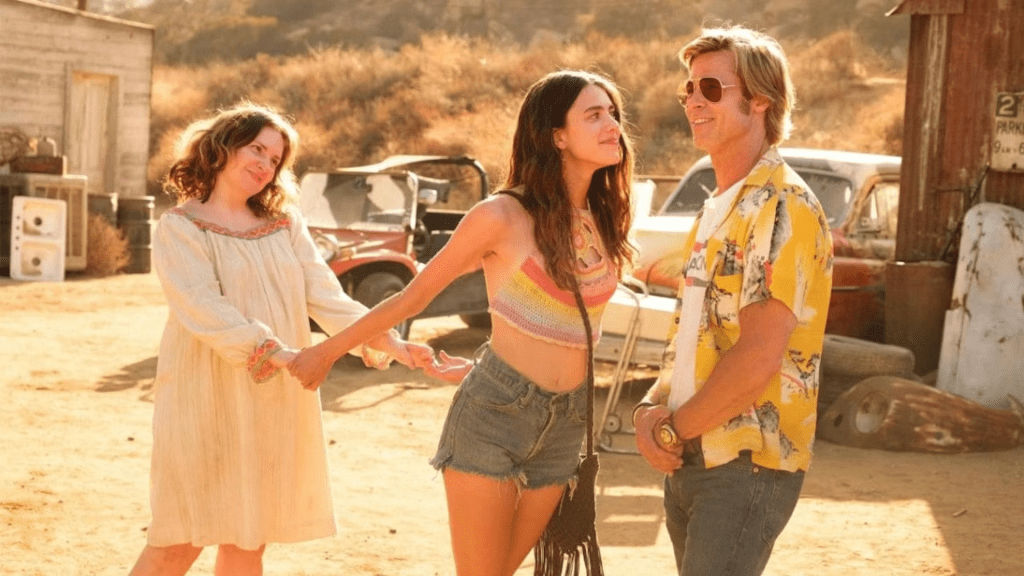
Take the scene at the Spahn Movie Ranch as a case in point. The entire set piece focuses on Cliff wanting to check in on his former colleague, George Spahn, whom he worries is being taken advantage of by the Manson family. Once Upon a Time… In Hollywood suddenly stops being a period-piece romp, shifting instead into a nerve-shredding thriller where we wonder whether Cliff will get out alive. Suddenly, we find ourselves trapped in a remote location with rundown houses and grubby living spaces as the scale and tempo narrow into something more claustrophobic by design.
The same goes for the climax, where we are suddenly plunged into a low-lit horror scenario as the Manson family lurks within the shadows, stalking our protagonists. It becomes a straight-up survival movie, where our heroes’ worries are no longer their fading careers or brittle egos, but their immediate physical safety.
Tarantino frames the Manson family as direct threats to the nostalgia theme park he’s built to frolic in, and it’s evident he actively loathes them for it. You can practically hear him throwing his toys out the pram as he pens the screenplay. The visceral disdain Rick holds toward the hippy subculture at large throughout the movie feels like Tarantino’s own voice breaking through. He simply cannot help but descend into a tirade of abusive fury whenever they waltz on screen to disrupt his fantasy world.
All of which reaches a bloody conclusion during the final act, where Cliff and Rick mutilate and disfigure the Manson family after they break into their home. Of course, one way to understand this is as an exploitation-cinema-inspired climax, where we are invited to watch real-life killers get their comeuppance in brutal fashion. It’s a form of historical catharsis where we’re invited to witness a timeline where Tate’s killers are punished before they even have a chance to harm their victims. In this timeline, Sharon survives, while her would-be killers get their skulls crushed and flesh burnt before they have time to act out their ideology. Yet on another level, it is also a director aggressively and brutally stamping out the very threat which symbolically slaughtered an era and memory which he loved.
Having the Manson family crushed, burned and ripped apart before they can get close to Tate and her friends is Tarantino’s refusal to face the actual history of the era he is recreating. All he wants to do is dance in the glory of nostalgia. When the dark reality of that period’s end arrives in the form of a violent wake-up call, he refuses to follow through with it. He actively rejects the demand to face the music, fighting to return to a carefree fable in which all Rick has to worry about is his lucrative career, drinking mojitos, and the downsizing of his home so he can maintain a comfortable lifestyle as he ages.
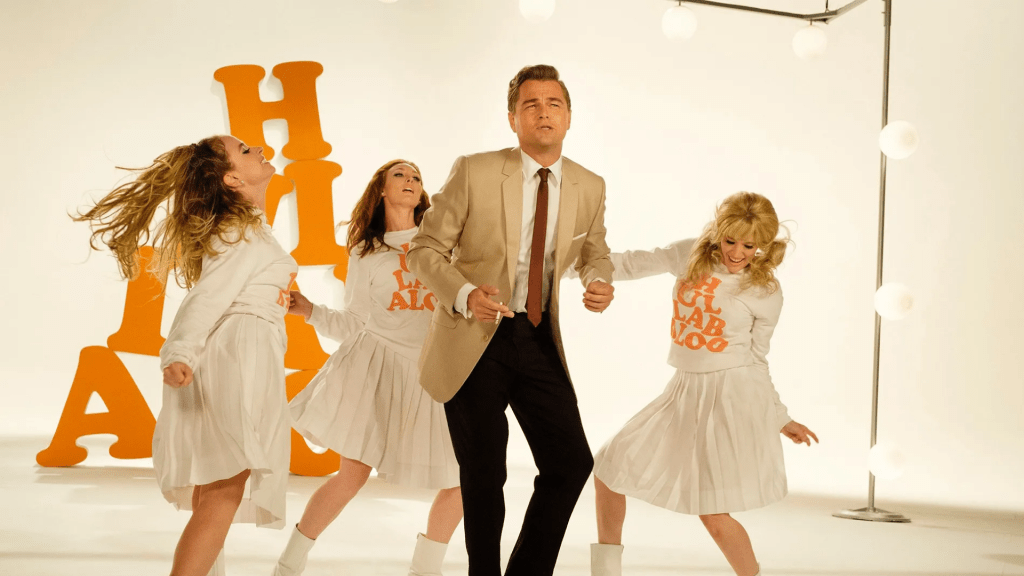
On paper, there is something a little unsettling about all of this. It hints at a filmmaker who is only interested in the surface-level glitz of ‘60s America. It ignores the horrors of the Vietnam War, which saw young people drafted and killed on a confused battlefield. It completely sidelines the fight for racial equality that was being fought on the streets of the US at the time. It doesn’t even hint at the lingering panic of the Cold War looming over the psyches of every American alive at the time. ‘60s Hollywood wasn’t simply a way of life; it was a fantasy used to cope with an America being forced to look at its soul and place within the world. The Manson murders weren’t simply a transition from glitz to grime, but a wake-up call to a nation that was dreaming. Except Tarantino doesn’t seem interested in that. Instead, he wants to keep on snoozing.
And yet somehow, he still manages to keep us onside throughout much of this film. It could be argued that this is his superpower. The very fact that he has been able to craft such a detailed and arresting version of the ‘60s makes it actively pleasurable to spend time in this environment. He paints a fastidious portrait of a landscape that no longer exists, immersing us inside of it, making us feel as though we belong there ourselves. We aren’t simply looking at Old Hollywood, we are riding shotgun with Rick Dalton and Cliff Booth. Whilst watching this film, it isn’t a glance into the past; all of it feels fresh and new, as if it is part of our present. He’s invited us to take part in the dream he is broadcasting to us via the medium of cinema.
Once the ticking clock of the Manson murder initiates during the film’s final act, it puts us in Tarantino’s shoes. He’s just spent the last several hours selling us a dream, only to then weaponise the jaws of history to make us protest in much the same way he does. Now that he’s built up his world and accustomed us to it, he threatens to yank it from us. Those hippy folk he’s had Rick showing disdain for are about to transform this crafted nostalgia simulation into a real-world horror show; a real-world tragedy that will uproot everything we’ve come to love about this gorgeously crafted fictional space.
It’s at this point that Tarantino throws his tantrum and refuses to let history do its thing, by which point, he’s got us on board. By keeping Tate alive and the Manson family brutalised, ‘60s Hollywood can linger on forever. The world he’s built can endure for all eternity, never having to change, fade or grapple with the deeper darkness crawling beneath its glossy surface.
Some will argue that this weakens the film, or that it plays into Tarantino’s tendency to rewrite history on a whim. Yet the clue is in the title; Once Upon a Time… In Hollywood is intended to be a fairy tale. It is not a period piece, but a half-remembered daydream born from a filmmaker who is in love with the very idea of a fantasy.
It’s for this reason that I’ve often felt this should have been Tarantino’s tenth and final film. In addition to it being his most self-indulgent piece of work to date, I also feel that it sums up this director’s quirks and tendencies to an almost-logical extreme. To him, cinema is an art form that he loves deeply; a love which he expresses through the very films he makes. Many of his past projects have been obsessive retellings and remixes of features and genres which shaped him growing up; whether they be Westerns, gangster flicks or exploitation cinema. Likewise, his tendency to intersplice the music he adores, as well as cinematography styles is an extension of this passion. Cinema doesn’t just become about telling stories for Tarantino; his films become hubs of self-expression where he can collect and exhibit the art that tickles his intellect.
There is perhaps a fair criticism to be made toward him for essentially assembling his films in this manner; carving up old favourites and stitching them together like some sort of Frankenstein’s monster. Nevertheless his competency in making films this way does make them highly appealing. A less talented filmmaker would do all of this much more poorly; making features that just feel like shoddy ripoffs. Yet part of Tarantino’s magic is that his passion allows him to use these as foundations for his craft. Everything he stitches together works to tell a specific story and evoke an experience in his audiences. It isn’t a case of copying for him, but is instead a recipe made from all the ingredients he loves the taste of. It’s just fortunate that his palate is good enough for us all to enjoy the meal he’s cooked.
Once Upon a Time… In Hollywood feels like the ultimate conclusion to this approach of filmmaking. He takes a limitless volume of sounds, styles, cultural components and aesthetics from a bygone era; then gets to work reconstructing them from the ground up. In many ways, this feels like the Avatar of this director’s career. It’s wildly indulgent, bloated and locked in a form of cinematic worldbuilding, yet it is executed with a level of detail and technical craftsmanship which makes it hard to detest.
Sure, it’s bloated and self-interested in some respects, but it’s also a passionate love letter from a man who has been immersed in the media which inspired it. This is a detail that has been present throughout much of his career. The skinny black ties, retro diners, and surf-rock soundtracks of Pulp Fiction and Reservoir Dogs were plucked directly from this era. The opening shots of Jackie Brown were lifted in its entirety from 1967’s The Graduate. Kill Bill itself is a stylistic assortment of Spaghetti Westerns, Giallo horror slashers, and Green-Hornet inspired set pieces. The macho, cynical WWII adventure films of the ‘60s went on to become the structural backbone of 2009’s Inglourious Basterds.
Once Upon a Time… In Hollywood is the moment in which his cultural obsessions crystallised into its final form. Some might say it’s the point where he stopped having people around him to rein his impulses in; the point at which his unchecked stream of consciousness was allowed to run wild. It’s the self-indulgent yet passionate ramble of a creator who has built a legacy out of meticulously constructing his empires out of the love of his youth. If this theory does hold water, then it’s little wonder he’s yet to figure out what on earth he wants to follow this one up with. After all, how do you follow up a fastidious encapsulation of your entire life obsession?
At the time of writing, his pre-planned swansong has yet to be released. Perhaps he’ll come out with something even more intense and unfiltered at a later date. As it currently stands in 2026, however, Once Upon a Time… In Hollywood still looks like the perfect closing act for a director who’s been honing his craft over the last three and a half decades.




Leave a Reply