

Rewatching The Legend of Ruby Sunday from a place of hindsight, I cannot help but be reminded of the final trailer for J.J. Abrams’ Star Wars: The Rise of Skywalker.
To explain what on earth I mean by this, we need to cast our minds back to that specific slice of marketing from October 2019. That two-and-a-half-minute promotional clip featured a gorgeous, sweeping John Williams revision of the beloved fanfare, hinting at something truly beautiful awaiting us on the horizon. It intercut familiar faces seemingly bidding farewell to one another with striking shots of space battles atop gargantuan star ships; giving the whole affair the sense of a heartfelt, epic conclusion to a four-decade saga. As far as trailers go, it was exciting, poignant, and highly effective at drumming up anticipation for the film’s festive release.
Then the film came out, revealing itself to be an overly-apologetic, panicked mess that essentially exposed the trailer as something of a fraud. Watching that same teaser today fails to conjure up the raw excitement it did back in October 2019. The final product provided a context that permanently compromised my relationship with it.
“What does a Hollywood blockbuster have to do with a Doctor Who episode?” you may be wondering.
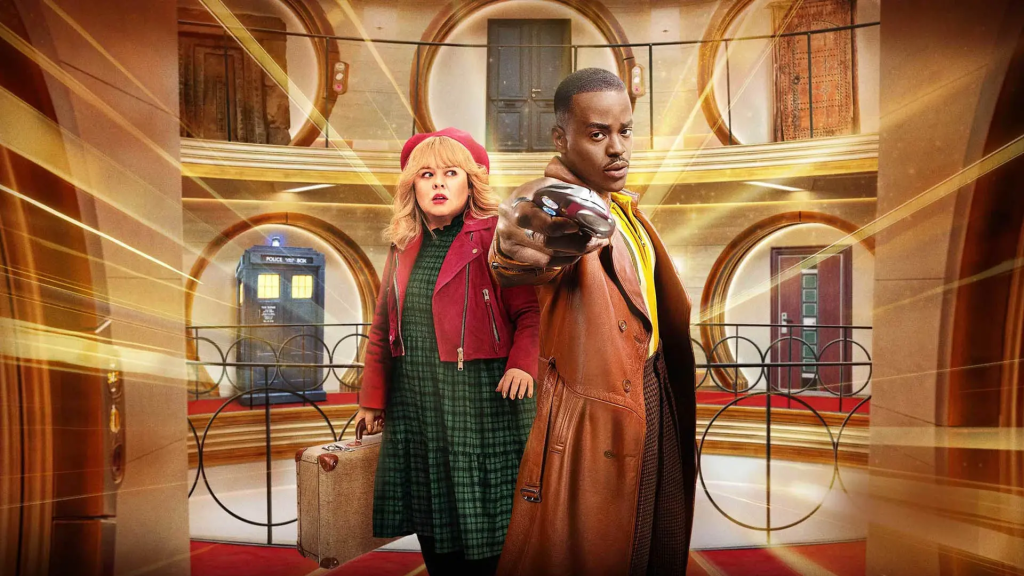
Well, I say all of this because The Legend of Ruby Sunday evoked a similar wave of emotions within me over the course of its airing. Upon first viewing the episode on the 14th of June 2024, I was filled with a sense of excitement of the promise of what was to come. Davies had constructed a 45-minute trailer episode, selling us a story yet to be concluded. The episode wasn’t executing a narrative with a dedicated beginning, middle, and end, but was selling us the promise of things to come; a promise that he ultimately would not be able to deliver.
As far as first-parters go, I felt the episode was a solid return to form for Davies. One of his greatest strengths from his first era was his ability to engineer gripping openers to multi-part stories. That remains very much the case here, just as much as it did fourteen years prior. Regardless of how the narrative ultimately resolved, he knew exactly how to hit all the right chords when it came to gearing us up for a conclusion.
Yet, for all the strengths this story presents when it comes to executing a teaser-oriented first-parter, it is perhaps fair to say that the script also serves as a reminder of some of the shortcomings inherent in the structure of such an episode type.
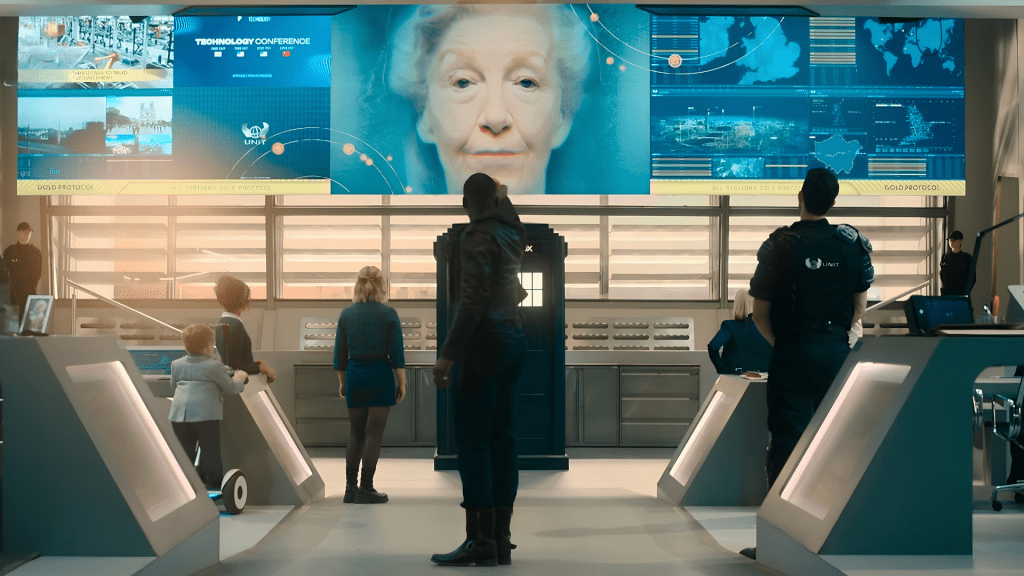
We must give Davies credit where it is due, because as a standalone piece of television, this is a ruddy good bit of tension-building. As far as cliffhanger-reliant first-parters go, he is a natural at writing these types of scripts. When I’ve spoken historically about Davies’ skills as a writer, I’ve often waxed lyrical about how good he is when it comes to character work, yet another area where he truly shines is when it comes to building tension.
This particular talent was crystallised for me recently while watching his 2026 limited series, Tip Toe. That story opens with a graphic murder taking place in a suburban Manchester neighbourhood. We are introduced to a shot of a middle-aged man hanging from a lamppost while an emotionless onlooker wearing a football shirt gazes up at the corpse. Behind the onlooker, a woman screams and bawls at the horror of it all. The narrative then jumps ten days into the past, and we spend the next five episodes working toward that fateful moment. The result is five hours of nail-biting television; the sort that keeps you on the edge of your seat right up until its final moments.
I mention Tip Toe because it showcases just how brilliant Davies is at establishing tension, sustaining it, then guiding audiences toward the horror. It’s also one of the reasons why stories such as Midnight and The Wild Blue Yonder work so well. The Legend of Ruby Sunday is yet another example of him doing this to great effect; delivering a story that utilises its time to establish tone and gradually shift it into something more sinister by design.
Davies lays down the groundwork of this two-parter, sets up the functionality of the Time Window, then lets his roster of characters interact with it. The story starts upbeat and energetic, with Ruby giddy-yet-hesitant at the revelation she’s about to discover who her mum is. Gradually, however, the tone begins to shift before our eyes. The plucky, kooky investigation into the identity of Susan Twist, or why Ruby was abandoned outside a church on Christmas Eve, is replaced by a creeping sense that something is deeply wrong. Beyond all the giddiness, something dangerous lurks. Before long, extras whom our leads were just laughing and flirting with are being murdered, and the Doctor’s joy is replaced with horror and rage.
On its surface, this is a solid, ghost-train romp of a story. It hooks us with mystery, gets us on board, then sends us toward a deadly endpoint.

I’ll confess, when it comes to Doctor Who, I love teaser-oriented multi-parters. They actually make for some of my fondest memories when it comes to this show. Whether it’s the Daleks emerging from a Void Ship at the tail end of Army of Ghosts, the Master’s fob watch reveal during the closing act of Utopia, or the ninth Doctor singlehandedly standing up to the Dalek fleet in Bad Wolf, they seldom fail to leave me desperate for the successive week’s follow-up.
That being said, I cannot help but think there is a weakness to this model of storytelling; one perfectly demonstrated within this episode. The main problem is that their quality is primarily dependent on the episode set to air the following week. If it’s a great conclusion, then you’ve got a solid and memorable episode. The problems tend to arise when the second part doesn’t quite stick the landing. Suddenly, a thrilling buildup retroactively transforms into something that feels almost fraudulent and disappointing by its very nature. It becomes the episodic equivalent of shattered hope; the promise of a thrilling tale where the tail end isn’t quite so thrilling.
In essence, setup-heavy scripts turn storytelling into a gamble. Davies is a master of rustling up excitement in his audience. This is a trait which extends to his public persona in general. He’ll happily sit on a chat-show sofa, eyes glistening as he talks about how he’s just penned the most electric script of his entire career, promising that we’re about to embark on the trip of a lifetime. This is a marketing skill which bleeds into his writing. It’s one of the facets that makes his writing so engaging, but it can also serve as the seed of his downfall on occasion. He promises us the world, even if he doesn’t quite know how to deliver it.
The Legend of Ruby Sunday represents this flaw in a nutshell. The mystery of Susan Twist, the cosmos-sized censorship of Ruby’s mother, the question of whether the Doctor’s granddaughter is returning, and the lurking threat building within the shadows are all sensational hooks. Yet for those hooks to retain their sharpness, they must have meat to hang from them.
Teaser-oriented models aren’t the only way to open a two-parter story like this. There are even ways to do it in which a poor conclusion leaves them largely unaffected in terms of their rewatchability. Perhaps the best example of this is 2014’s Heaven Sent. Widely considered one of the greatest episodes of Peter Capaldi’s era, it remains a benchmark in how to make an effective, self-contained first-parter. It functions as an isolated story in which the Doctor is imprisoned in an apparent medieval castle surrounded by an endless ocean. The script explores the Doctor’s grief, establishes a genuinely perplexing mystery which concludes entirely before the end credits arrive, and features a final act which masterfully weaponises the mystery as an escape hatch for the Doctor’s escape. It is a story that boasts not only profound character development at its heart, but a solid beginning, middle and end.
What is most satisfying is that the sequel to this story, Hell Bent, is considered something of a mess by comparison. The consensus is that it’s muddled, gets too bogged down in wider Doctor Who lore, and engages in “and then” storytelling to reach its conclusion. It even pulls a similar stunt to The Legend of Ruby Sunday’s sequel by revealing that the primary series arc is a red herring that audiences need not care about.
Yet despite Hell Bent’s failings, because Heaven Sent was a self-contained script in which writer Steven Moffat maintained a clear central focus, the quality of its sequel didn’t hinder its rewatchability. Instead, it exists as a masterpiece in its own right, serving as an independent story with enough substance to function entirely in isolation from the wider series surrounding it.
By comparison, I’d argue that The Legend of Ruby Sunday fails to do this. While the script has a purpose, that purpose is largely intended to race us toward the reveal of Sutekh. The episode opens with the Doctor and Ruby declaring their mission statement to uncover the series arc, then spends 45 minutes getting us 90% of the way there (minus the reveal of Ruby’s mum). It serves as a prelude to Empire of Death; a sequel which ultimately will not know what to do with the big reveal this story guides us toward.

None of which is to say that The Legend of Ruby Sunday was doomed to fail from the start. Nor is it to say that it doesn’t have any interesting ideas lurking within the story. In fact, I’d go as far to argue that quite the opposite is true. This story is a goldmine of fascinating potential, which could have gone in countless directions.
For one thing, exploiting Ruby’s lifelong struggles with the trauma of abandonment is a plot point that has endless possibilities. Having her stand on the cusp of a revelation she’s been chasing for most of her life could be the greatest thing that’s ever happened to her, but also runs the risk of devastating her. The concept of Ruby having access to information she wouldn’t otherwise have, solely because she’s travelling in the TARDIS, poses a perfect “be careful what you wish for” scenario.
I also love how Davies ties the orphan plotline into the Doctor’s own abandonment of his granddaughter, Susan, turning it into a parallel mystery running alongside Ruby’s. While we are invited to ponder whether Ruby is finally going to discover who her mother really is, we are also made to wonder; might the Doctor be about to find out what happened to his own grandchild after he left her behind in war-torn, 22nd century London?
This is all nailbiting stuff; questions that can go in a thousand and one different directions. The story guides our heroes toward profound truths, yet neither of them know how they are going to respond or react when the nature of those truths come to light.
Empire of Death will not do anything of interest with any of this. I don’t think this is entirely the fault of Davies, as I do feel there was probably a far more interesting draft of this script out there somewhere, before production troubles got in the way of things (more on that in the following essay). Nevertheless, the version we got fails to add any weight or depth to what is set up in The Legend of Ruby Sunday.
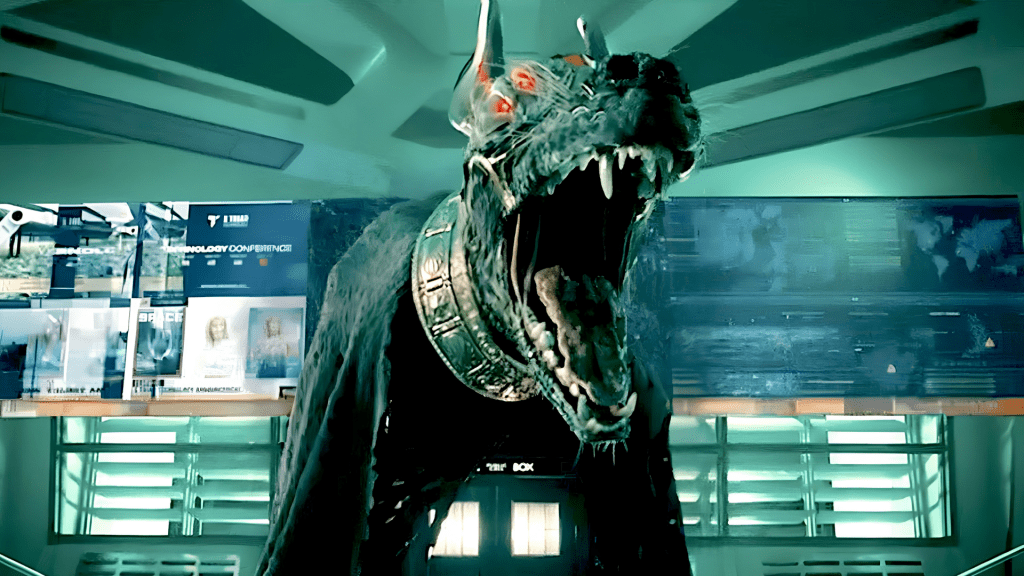
At its core, The Legend of Ruby Sunday is a teaser-oriented episode as opposed to a self-contained narrative. It is the type of story which showcases much of the strengths which are possible when it comes to this type of storytelling model. It excels in its ability to pull us in and build our sense of anticipation. It leaves us desperate for the following week’s story, evoking that cliffhanger glee which is often triggered when we hear the trademark Doctor Who theme kick into gear. It’s a fabulous way to engineer tension.
It is also a demonstration of the weaknesses inherent within such a story. Beyond being an effective trailer for a future story, it doesn’t hold enough substance to stand on its own two feet. Its content is only as good as the episode which follows it. Had Empire of Death been a hit, this would have remained an excellent opener to a two-hour story. Unfortunately, it ends up being an exciting first act in a messy story which didn’t stick the landing.
Whereas self-contained openers like Heaven Sent are able to survive rewatches intact, The Legend of Ruby Sunday just ends up feeling like a well-made trailer which reminds us of how we felt before we were disappointed.
It’s a victim of hindsight; a solid episode that’s impacted by the weaknesses inherent within its structure.







Leave a Reply