
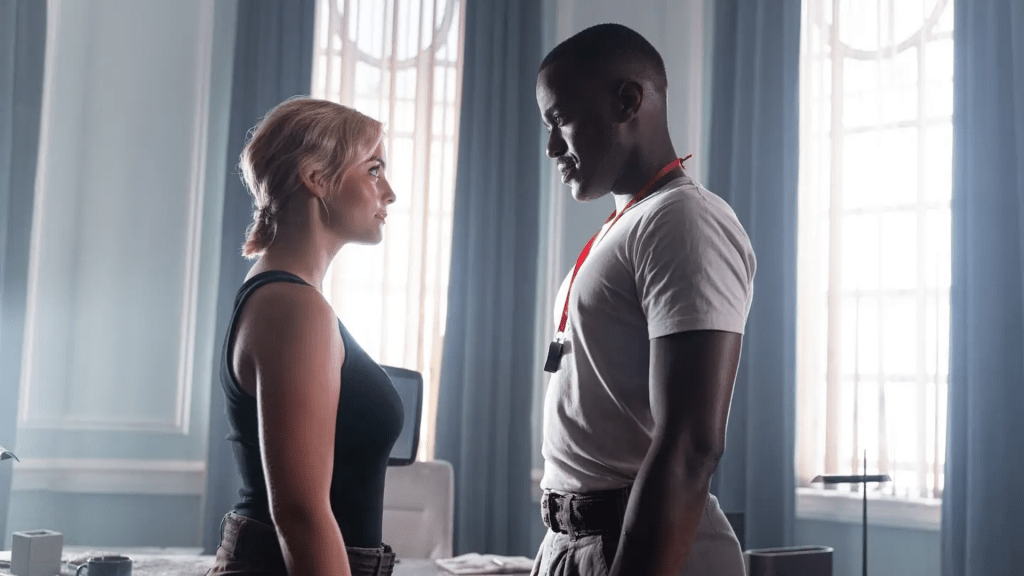
Russell T Davies spends Ncuti Gatwa’s debut series building a puzzle box, only to topple it before the finale comes to a close. What begins with Ruby Sunday abandoned on a snowy church doorstep quickly escalates into a cosmic riddle. It is a mystery marked by memories bleeding through the universe, centering on a question that cannot be answered even by a Time Lord with infinite resources at his disposal. The arc is as clear as it is ambitious: Ruby’s mother is an impossible secret hidden by the universe.
Empire of Death supercharges this mystery by having even the god Sutekh himself become obsessed with finding out the answer. If a deity with his own army of Harbingers spread out across the universe can’t even figure out the truth, then who on earth is Ruby’s mother exactly? This is a question with an answer almost as safeguarded as the Doctor’s name itself. Surely the revelation is so powerful and dangerous, it’s enough to rattle the foundations this fictional universe is built upon.
Except it then decides to take a radical left turn, revealing that the mystery we’ve been sold for the entire series is actually not a mystery at all. At least not in the way we imagined it to be. Ruby’s mum, it turns out, isn’t anyone special at all. Her name is Louise Miller, who fell pregnant at the age of 15. Louise lived under the same roof as an abusive stepfather. Unwilling to subject her daughter to the same circumstances, she hid the pregnancy and left her newborn on the doorstep of a church on Ruby Road. Louise is neither trickster nor god; just a regular woman who wasn’t ready to raise a child.
On paper, the idea of Ruby’s mum being no one special isn’t a terrible concept. In fact, it’s quite an authentic narrative decision for the show it plays out in. One of the things Doctor Who has always been good at depicting is the beauty of ordinary lives. It’s not meant to be about privileged or gifted souls who were meant for greatness; it’s about “normal people” standing up for what’s right and allowing their humanity to save the day. It’s David and Goliath in television form. This is one of the numerous reasons why turning the Doctor into the immortal Timeless Child during the Chris Chibnall era fell flat on its face. What made the Doctor so beautiful prior to 2019 was the idea that they were a rebel who ran away from their people and built a name for themselves through their actions alone. It’s also one of the reasons why Rose Tyler works so well during the first series of the 2005 revival. Rose is a working-class woman who has no direction in her life, only to prove her worth when she finds herself caught up in the midst of impossible circumstances.
Davies understands Doctor Who’s ability to celebrate real, relatable people becoming extraordinary through their actions. I suspect that’s what he was going for when it comes to Ruby’s arc with her mother. He was never going to have Ruby turn into a being from another world; she was always meant to be a young girl who was abandoned as an infant.

The problem lies in how Davies frames and executes this arc. He spends an entire series building Ruby’s parentage into a question powerful enough to drive deities barmy, even dedicating an entire penultimate episode to answering the question, only to reduce that momentum to a redundant red herring. Furthermore, reviving the “companion as a puzzle” model that fans criticised during Moffat’s run feels patronising. Davies essentially uses the anticlimax of his own story to subtly scold audiences for chasing the very mystery he’s spent nine episodes cultivating.
Yet while I initially assumed my frustration stemmed entirely from its misdirection and weakened narrative weight, rewatching Empire of Death makes me realise my dislike runs deeper than my frustrations toward a mere broken puzzle box. Truth be told, I actually suspect that this idea isn’t one that’s inherently doomed. If done right, there could well be a version of this very arc that’s both ambitious, effective, and beneficial to the series at large. It could have taken us somewhere far more interesting.
Let’s, for a moment, pretend that all the plot holes present throughout Empire of Death never existed. Entertain, if you will, a version of this script which explains away the reasons Sutekh’s Harbingers were physically unable to hack into the 2047 databases set up by Roger ap Gwilliam to discover who Ruby’s mum is. If we overlook this, you’ve essentially got a story in which a powerful god has become obsessed with a character travelling upon the ship it is stowed away upon. The god proceeds to puppeteer the Doctor and Ruby’s motives to answer this question. It forces elements of Ruby’s memories into reality, tricking her and the Doctor into thinking it needs uncovering right away. What seems on the surface like a story of finding an otherworldly mother turns out to be a very human question warped by a deity frustrated by a blind spot in their knowledge.
And yet, the arc still does not work. Even if you apply this reading to everything leading up to Empire of Death’s reveal, everything falls flat. Why is that?
The problem appears to lie in the lack of character conflict and messiness that should stem from such a story. This isn’t working because at no point are we sold the idea that any of this pushes these characters into new places. They know how they feel on the matter from the minute they are on screen, and at no point do those feelings shift or unfold in any surprising sort of way.
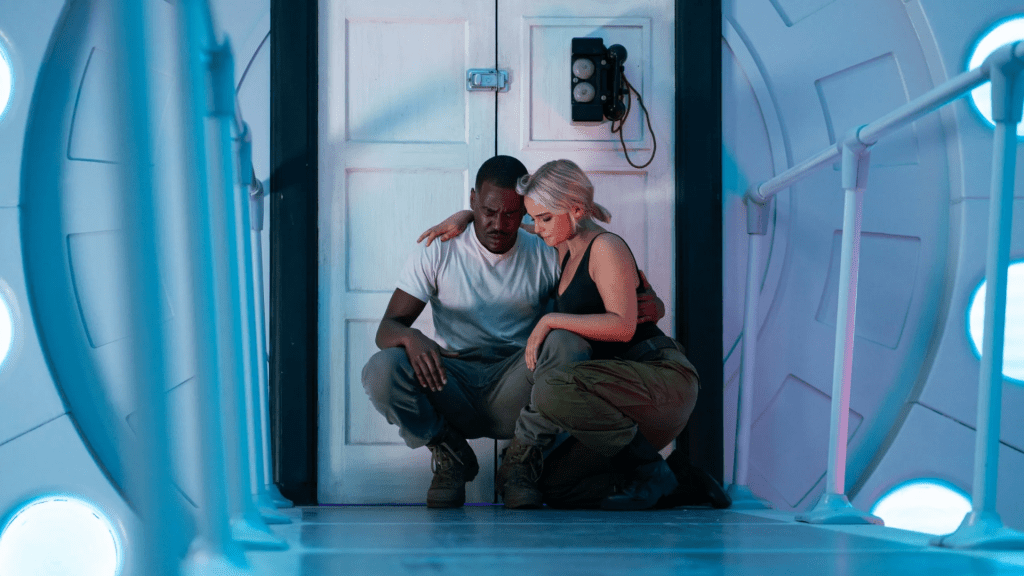
To examine this, let’s cast our minds back to companion Rose Tyler from the 2005 series. One of the character facets threaded into Rose’s story is the fact that her dad died when she was just a baby. As the series progresses, we gradually learn that Pete Tyler’s death had a profound psychological impact on Rose. She has no memory of Pete, relying solely on idealised tales recounted by her mourning mother, Jackie. Yet this series does not open with Rose telling the audience about her loss. We don’t even learn about Pete’s death until the third episode. During the events of The Unquiet Dead, a housemaid named Gwyneth reveals her psychic sensitivity by mentioning the loss of Rose’s father in passing conversation. It’s a detail intended solely to trigger a totally separate plot twist. Rose does not bring this up again until a handful of episodes later, when she finally asks the Doctor if they can go back in time to the day of Pete’s death, so she can be with her dad as he passes.
During the events of Father’s Day, we finally learn the extent of the impact Pete’s death has on Rose. Not because she sobs into the Doctor’s arms every five minutes while telling him how much she misses him, but through her actions. Rose breaks the rules laid down by the Doctor, altering history, triggering a destructive paradox, and risking billions of lives. Rose’s distress at never having known the father her mother told her about is shown through her actions and selfish behaviour. Throughout the episode, we even watch Rose grow frustrated as she learns that the version of Pete which Jackie has told her about does not marry up with the real-life version. In reality, Pete turns out to be a flawed, morally questionable man who cheats on his wife and behaves more like a Del Boy parody than a sharp-minded entrepreneur.
Rose doesn’t talk about the sadness of losing her dad throughout the 2005 series like Ruby tends to during this series. When Rose does eventually confront it, we watch her emotions organically unfold and evolve based on what’s happening in front of her. This is where we learn about how she idolises her dead father, and how logic slips away when she’s presented with an opportunity to bring him back from the dead.
This is where Empire of Death and Ruby’s wider arc fails in the handling of her mother’s reveal. We don’t see Ruby ever challenge the Doctor, break the rules or behave illogically because of the pain brought about by her loss. When we begin the series, she’s sat in front of Davina McCall, recounting how sad she is that she never got to find out where she came from. For the remainder of the series, we have Ruby spelling out how upset she is to her new Time Lord pal. The Doctor remains on the same page for the most part too, determined to answer the “impossible” question; so much so, he’s comfortable using banned technology to rebuild the night in question.
The only moment the Doctor shows any hint of resistance is when they finally find Louise. As they stand outside the coffee shop she’s in, the Doctor reminds Ruby that her mother ultimately left her, and that she doesn’t have to go in. Ruby ignores him and he acts frustrated for a few seconds before accepting the situation for what it is. Ruby meets Louise, there’s a fleeting (and admittedly emotionally effective) moment where they reunite, before it’s all smiles and hugs. There’s no hint of conflict, confusion or frustration on either character’s part when they meet. None of it feels messy, complex, or nuanced.
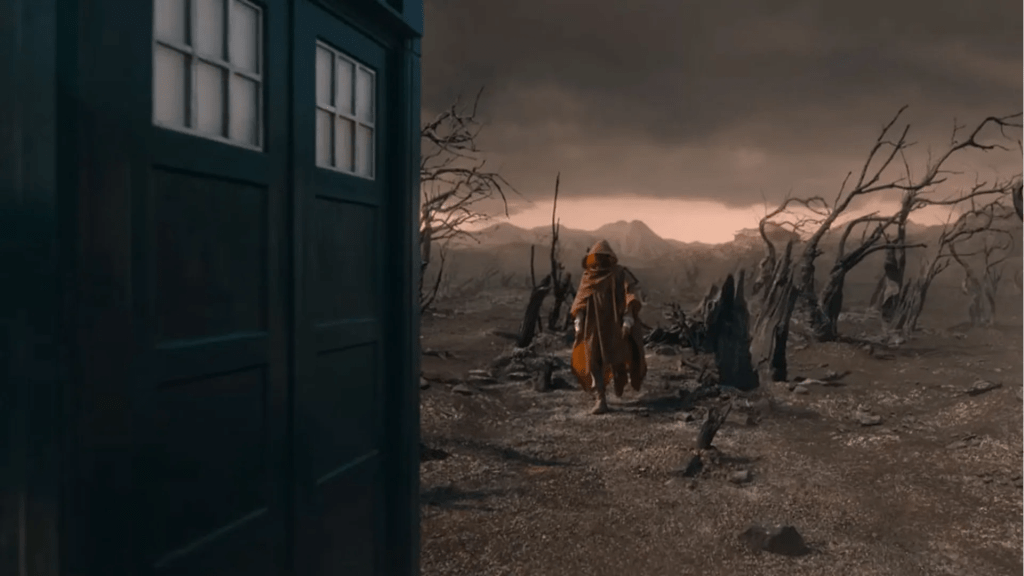
Louise leaves Ruby as an infant. Whereas the story explains her reasons, a young life is inevitably impacted by this choice. Humans are emotional creatures. Even when reason is given, our responses are rarely neat or logical. Beyond the sadness of not knowing, surely Ruby feels a conflict of differing emotions. Is there no resentment? Does Ruby feel any indifference as she sits opposite her mother in that coffee shop for the first time? The script suggests that this isn’t the case. All is happy and well in the world; no further questions are necessary, it would seem.
All of which points toward one of the biggest frustrations with this arc. It is not willing to explore these characters in any sort of meaningful way. We never really learn anything about Ruby on a deeper level than her feeling sad about never knowing her heritage. This makes it difficult for us to truly care about Ruby’s predicament. It never leaves you feeling warm and fuzzy when she finally gets what she wants, because it all feels a little too superficial and engineered.
I appreciate that Doctor Who is a broad-church science fiction fantasy filled with monsters and alien worlds, but that hasn’t stopped it from delivering honest, raw, detailed and flawed characters before; as we’ve demonstrated with Rose. For Davies to frame this story not as a puzzle box but a character arc, he needs to apply the right elements to make this a compelling character journey. The twist alone isn’t enough to carry this.
This twist could have worked, had more thought been applied; not just by adding depth to Ruby’s reunion with Louise, but in how it could have influenced the Doctor and Ruby’s relationship. I mentioned back in my Space Babies article that what is missing from that episode is conflict between the two leads. The Doctor, having been an orphan who was tortured by his adopters, should have been sceptical of Nan-e’s care. Likewise, Ruby having had a more positive fostering experience could have taken a more supportive stance. Now imagine if that conflict had bled across the entire series. Perhaps the Doctor, rejuvenated following his bi-generation, stumbles across Ruby’s dilemma and drags her into a Doctor Who story against her will, insisting they find her real mum. Perhaps Ruby, who starts out curious, begins expressing hesitation over the thought of meeting a woman who left her alone in the snow as a baby. The Doctor ignores her hesitation, determined to unearth the records that will uncover the woman who left her baby on Ruby Road.
This could have become the central conflict; the Doctor is obsessed with discovering Ruby’s origins because it’s something he could never uncover for himself. He places himself in the role of a cosmic therapist after having rested his war traumas following his bi-generation; unconsciously grappling with deeper hidden anxieties he never managed to process whilst sunbathing in Donna Noble’s backyard.
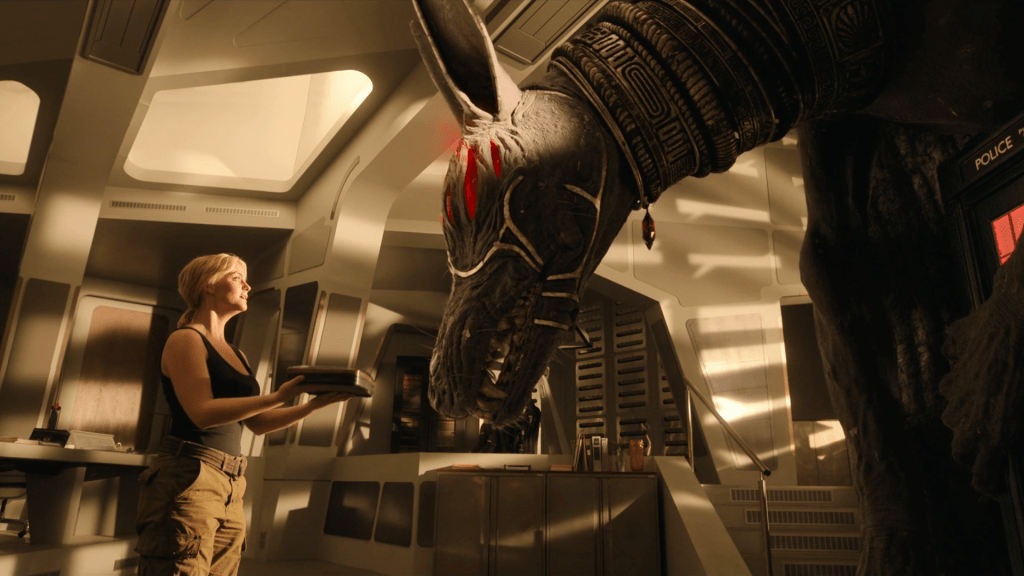
Ruby, on the other hand, might come to the realization that she doesn’t really want to know who her biological mum is, learning that Carla is her real family. You could even have conflict with Carla stem from all of this. Perhaps early on, Carla feels Ruby drifting away as she searches for answers. When the Doctor enters their lives, the tension escalates as he promises to help Ruby. The series could wrap with Ruby discovering Carla is her real mum and that biological origins don’t define her. It might not be groundbreaking or shocking, but this is an arc with the potential to explore messy, emotional, human ideas that are interesting and poignant in equal measure.
All of this doesn’t just point to a flaw in Empire of Death as an episode, but to a wider issue with this series as a whole. It’s not that Ncuti’s debut year was doomed from day one. I remain of the opinion that the ingredients for an engaging, excellent first year are very much present here. There are great ideas and solid moments throughout all these episodes that really do dazzle in isolation. The problem isn’t the components present, but how they fail to take the show in any meaningful direction. Whenever something interesting is raised or executed, the series panics and hits the reset button as quickly as it can. We saw this in Rogue, and we see it here. The question of Ruby’s mother isn’t presented to take the show’s characters anywhere interesting, but to wrap up Ruby’s story and write her out before the show reboots itself again in time for series two.
This leaves me walking away from 2024’s Doctor Who feeling like I’ve walked away from something ambitious yet terrified all in the same breath. It never feels as though Davies is trying to move the show forward, preferring instead to keep it in a strange state of competent limbo – eager to evolve, yet too hesitant to do so.
I stand by my beliefs that Davies is a remarkably talented writer, capable of producing stellar Doctor Who when he so desires. The problem is that he doesn’t appear to be showing off a clear long-term vision for the show at this stage in the game. None of this feels like it is leading anywhere. Maybe this has to do with the behind-the-scenes chaos that was rumoured during production. Perhaps there were other creative struggles at work which halted the creative process along the way.
Whatever the real reason, the problem is that Ncuti Gatwa’s debut series remains an interesting chapter in the show’s history, yet one trapped in a time loop it needs to break free from. It isn’t the show’s lowest point by any stretch of the imagination, yet when all is said and done, it leaves a lingering frustration behind.





 Amber Poppitt
Leave a comment